
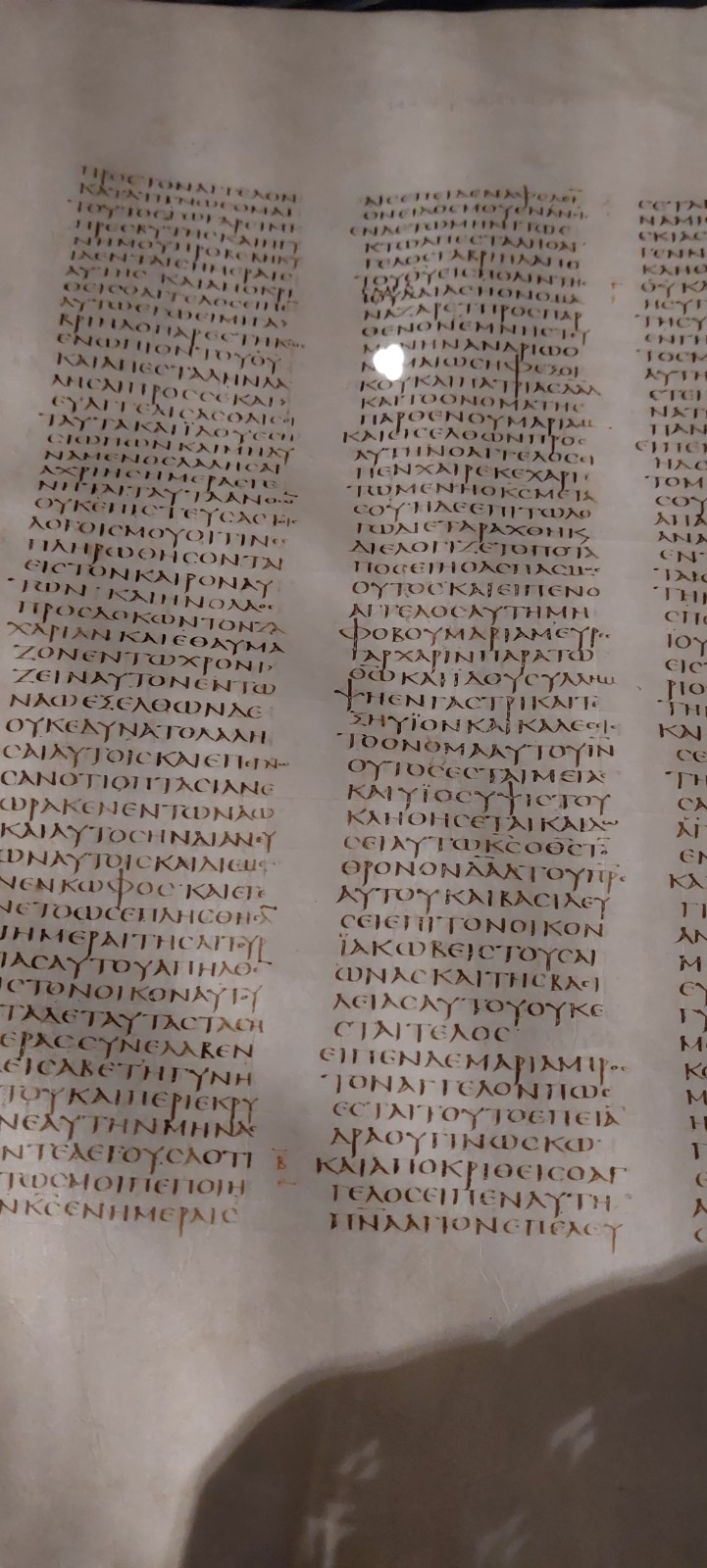
 |
| 7th line down middle column |
I woke to a kindly private text from my brother pointing out
a typo in my recent blogpost about some research trips I’d done for my dissertation:
British Museum instead of British Library. Fortunately, blogs are easy to
correct and I reminded myself it couldn’t be as disastrous as the email I once
sent to Boys’ Brigade parents asking them to make sure their boys brought their
wellies – at least, I meant to type wellies!
I’ve been thinking
about mistakes a lot recently.
In the British Library (and if you’ve never been, please do –
it’s wonderful), in its aptly named Treasures Gallery, you can see the 4th
century Codex Sinaiticus, our earliest surviving manuscript to contain the
whole New Testament. It’s open at Luke’s story of the Annunciation where
someone has crossed out ‘to a city in Judea’ to correct it with ‘of Galilee’.
You can also view a He Bible. Different versions of the 1611
King James Bible translate Ruth 3.15 as either ‘he’ (Boaz) or ‘she’ (Ruth) ‘went
into the city’. Although the Museum of the Bible points out that this may not
be a typesetting error but due to discrepancy in the text. Modern translations
still differ.
And we probably all know about the 1631 Wicked Bible, with
its compositors’ mistake of leaving out a key word to read “Thou shalt commit
adultery”!
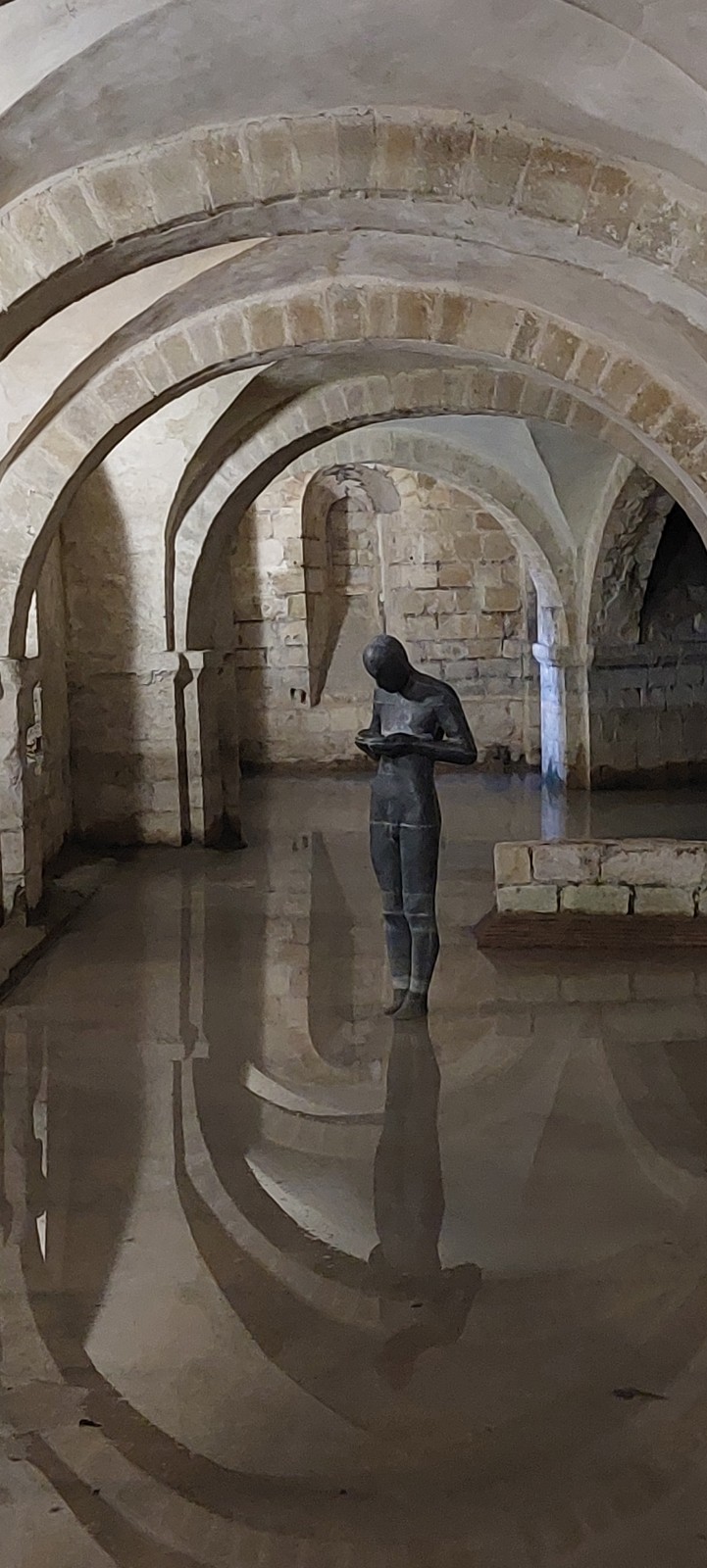
I also went to Winchester Cathedral, primarily to see the Winchester
Bible in their Kings and Scribes exhibition. But I was struck by the story of diver
William Walker, who, between 1906 and 1911, helped rescue the cathedral from
collapse by installing over 25,800 bags of concrete. In the crypt now stands an
Antony Gormley statue on top of that concrete but still in a pool of
groundwater, sometimes rising high enough to fill the bowl the statue holds. Somehow,
the flooding adds to the beauty and transforms it into a dynamic piece of art.
Which leads me onto kintsugi, a key concept in my dissertation,
and how damage can be accepted and integrated, transformed into something more
beautiful than the original flawless piece.
Or consider how children can get words or phrases wrong but
these become memorable or endearing. Back to my brother again, I still struggle
to think of the correct word when ‘scooper-upper-dumper’ works so much better
for a mechanical digger. Or my eldest son who misheard a word to confuse it
with a family friend’s name to create ‘crash bang Lawrence’!
I can’t help thinking how the errors in those manuscripts humanise
them and make them even more precious. And then there’s how the Risen Christ
still had His wounds. Our upside-down God turns something horrific into something
wonderful. His wounds seem like a metaphorical version of kintsugi to me.
God doesn’t make mistakes, we’re told. But He does allow
life sometimes to damage us. I wonder if we need to be kinder to ourselves – as
people and as writers. Not to ignore our flaws but not to be afraid of being corrected,
edited. To allow God to kintsugi us and
our work. To consider if what we perceive as mistakes may make us, our writing,
more relatable or cracks ‘where the Light gets in’ for others to see.
Just like that email I wrote (or even the second one that
repeated the same mistype!) has transformed from highly embarrassing to a great
story.
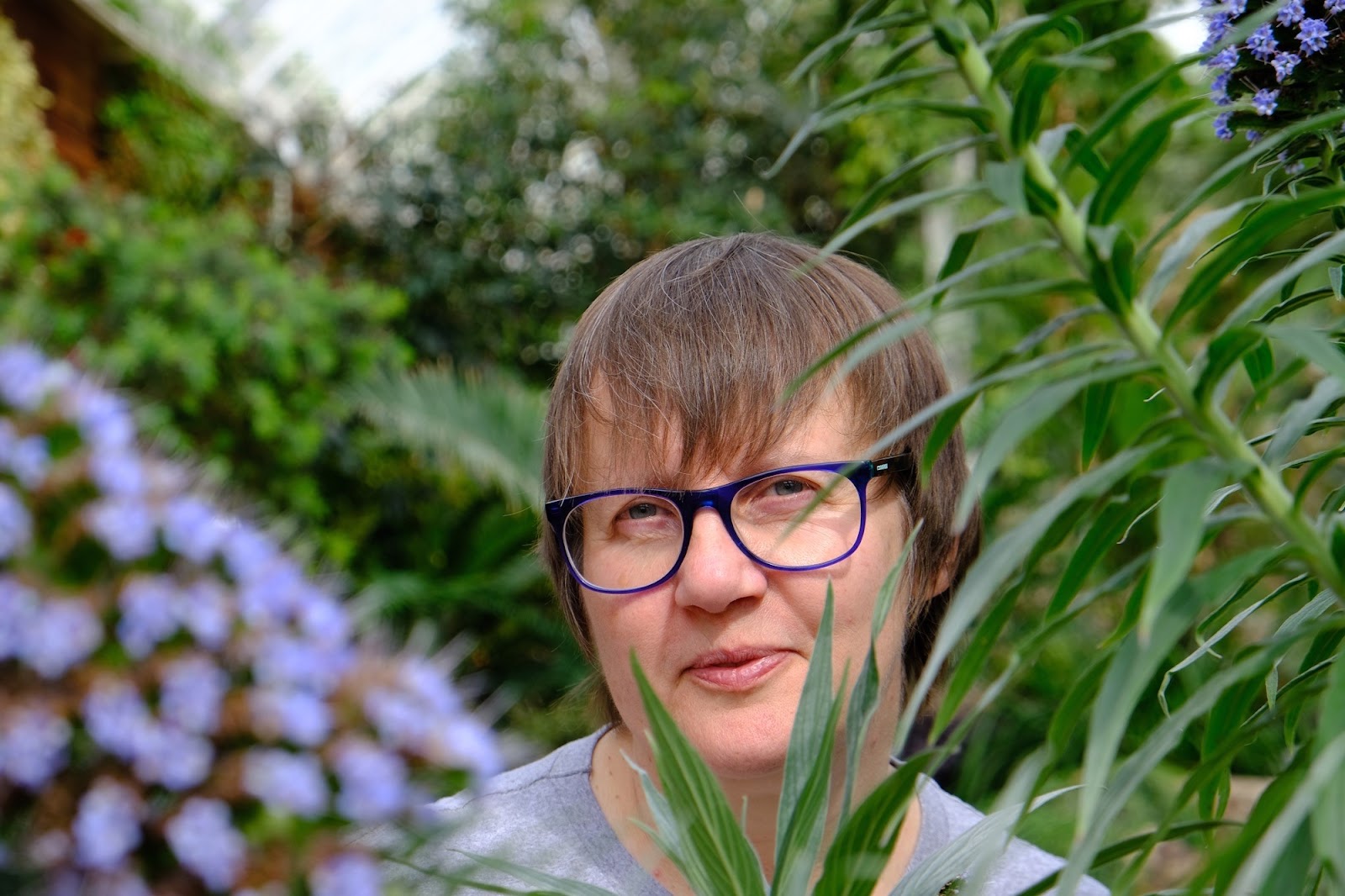
Liz Manning lives in Cornwall and is doing a Creative
Writing MA at Plymouth University, where she’s exploring fiction, poetry, and dramatic
writing possibilities. She’s working her dissertation, a hybrid and visual
poetry collection called “These Three Remain”, which explores how faith, hope
and love sustained her through difficult times.
She blogs regularly at https://thestufflifeismadeofblog.wordpress.com/

