
A fortnight ago I was a tourist in London visiting, amongst
other places, Westminster Abbey.
It’s an impressive building but on State occasions, when we
normally see it, you cannot really sense its essence as a place of daily Christian
worship or breathe in the triumphs and disasters of those commemorated that
have formed so much of our British history.
At one point I was walking over the slate devoted to Charles
Darwin only to look up and find Wilberforce looking down on me. I
had my photograph taken standing next to Jane Austen, nodded to William
Shakespeare, and wandered around several sarcophaguses of Admirals, Generals,
and past Monarchs.
The most intriguing sight however belonged to two ladies,
kneeling down with J-cloths and various cleaning materials, chatting away as
they dusted, cleaned, and polished an old chair.
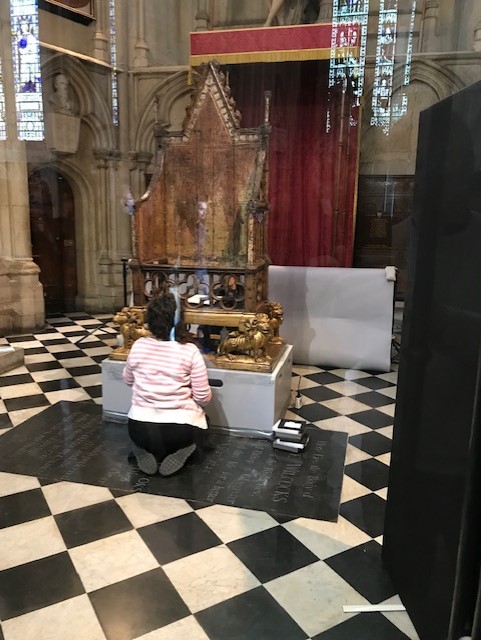
The Coronation Chair, dated from 1297, was locked in a small
room behind a glass screen, but the public was permitted to watch its preparation.
It’s been gouged and dented over the years, a collection of carved graffiti, with dates and initials…an amusing outlier in an otherwise flawless ancient ritual.
In summary, then, despite the grandeur of Westminster Abbey
and the weight of history that it carries, it was the sight of the two ladies
polishing an old chair that stopped me in my tracks.
During the Coronation, it was a similar moment of simplicity that
caught my attention.
Yes, the choir and the music were beyond perfection. The
robes, orbs, bejewelled swords, crowns, eloquent prayers, and the telling
sermon were memorable, but it was the privacy of the Anointing that spoke to me. And, I feel, may have immediate relevance for us as writers as much as
for King Charles III.
To prepare for the anointing Charles had to remove all his robes
of state, before kneeling. At this point he was wearing just a pair of trousers
and a shirt; he could have been any man. He was in fact an AnyMan. Like you and
me. No special robes, just a man, kneeling before God.
Screens were put in place so that the Anointing was obscured from the public. The anointing oil, symbolising
the heavenly blessing upon which he is entirely dependent to execute his reign,
was poured, the screens removed, and King Charles III emerged as an anointed
King.
So, perhaps it is a good moment for us to kneel before God,
whether known or unknown, having removed any sense of recognition or status, to receive a fresh anointing from God for our writing, whether for children’s
books, theological works, historical fiction, poetry, crime drama, travel
writing, or blogs.

