Whenever we tell a story, true or fiction, we need to be
kind to our reader by taking a position, whether or not they are going to agree
with us. It is the only way we can be clear.
Jesus always did this, to the amazement of his
listeners and the dismay of Pharisees, Scribes and Elders looking on, who loved
to show off their knowledge by examining, ‘on the one hand…’ and ‘on the other
hand…’ until they had accumulated armfuls of possible hands without reaching
any conclusion.
This is exactly what I am about to do now with the
David and Bathsheba story, my purpose being to illustrate just how hard a task
this can be. And to ask you your view of this story, at the same time.
WHO SET UP WHOM?
Just what was going on? Who were the goodies
and who the baddies?
The author perhaps gives us a clue in verse 1: In the spring, at the time when kings go off to war, David
sent Joab out with the king’s men and the whole
Israelite army.
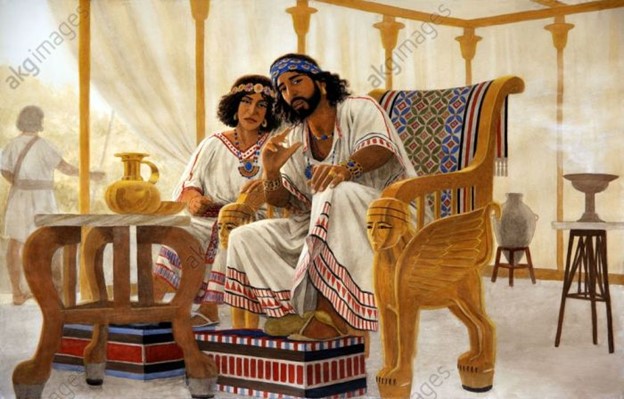
Do you, like me, detect a note of
reproach against King David here? He’s not where he should be. He has let
others go fight his battles for him.
THE STORY
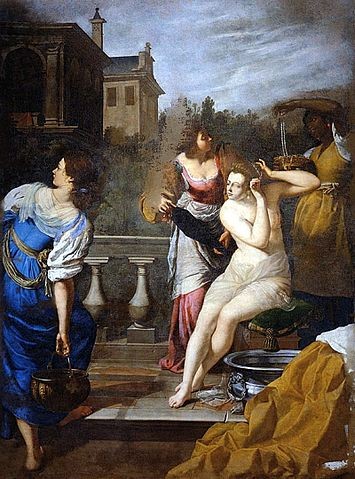
Has he stayed home because he is lusting after Bathsheba, bathing in the
lantern-light beneath his balcony? Or is he the victim of her inveiglement?
Perhaps she is acting under coercion from Uriah, her husband, presently
away fighting with the Israelite army?
The story tells us that David seduces Bathsheba, though she has little
choice about the matter, since he sends his men to bring her. After he has his
way with her, he sends her home.
However, she is pregnant, which David tries to cover up by coaxing Uriah
to go home (and, presumably, sleep with his wife) when he is next in Jerusalem.
Uriah, however, refuses and goes off to sleep in the garrison, where his men
are, arguing that, if they can’t go home to their wives, neither should he.
When God gives people a challenging task, He promises
He will be with them and then He sends a helper.By now, Jerusalem’s tongues are wagging. David, frustrated, arranges to
have Uriah killed in battle and marries Bathsheba. David’s friend, the prophet
Nathan, opens David’s eyes to his ungodly behaviour.
David, filled with remorse, though not apparently for what he has done
to Uriah or Bathsheba, cries out to God: “Against
you, you only, have I sinned and done what is evil in your sight,” (Ps.51:4).
This begs the question…
WHO SET UP WHO?
I see four possibilities and I would invite you to make your
own choice. I can see there is an argument to be made for any of four possible
scenarios:
1. Elderly David, too arthritic and cranky to
fight, fancies some fresh meat and has been watching Bathsheba, possibly a teen
of only thirteen or so, the too gorgeously beautiful young bride of one of his
generals, a Hittite foreigner, to boot. He takes her but does not fall for her.
Rather than exercise his right of kings to insist on keeping her, he sends her
home afterward. If he thought Uriah would play ball and pretend it never
happened, he is in for a surprise. Uriah says he would not dream of sleeping
with his wife when his men cannot sleep with theirs. He returns to the front,
only to be ‘killed’ on David’s order. David now marries Bathsheba and, corrupted
by power, does not realize he has done anything untoward until Nathan points it
out. He is then contrite.
2. Uriah, the Hittite general, has plotted against
David from the start: forcing his

young wife
to get the king going and commanding her to sleep with him, then refusing to go
to her and risk having her child by David palmed off on him as his own. Does
Uriah plan to blackmail David or just bring him down? Whatever his intentions,
David will not forgive upstart Uriah’s failure to play ball and Uriah loses his
life.
3. Bathsheba, fed up and bored with the absence of
her husband, the Hittite her parents have married her off to, thinks she could
do better with the king – after all, she knows she is drop-dead irresistible. It
would be a shame not to use those assets. Her heart sinks when David sends her away
after seducing her…But wait – she is pregnant! Surely now the king will marry
her and own his child? But no, he tries to get Uriah to be the Dad. Luckily for
her, (in her opinion), Uriah won’t play ball, which ticks David off, and he
arranges for Uriah to be killed. David is now forced to marry pregnant Bathsheba:
she wins in the end.
4. Uriah and Bathsheba in cahoots set David up.
She falls pregnant, Uriah cannot be considered the father. David, irate,
justifies to himself the killing of upstart Uriah. No one should try stuff like
that on with him! Of course, now he has to save himself from a scandal and marry
yet another wife… Bathsheba. It’s a hard-up life.

Can you think of any more possibilities?
Or which of the above do you favour? Let me
know in your comments below.