
end of module assignments are submitted and all I can do now is wait for my
marks. I have to admit that I want good ones. Teenage ambition is back.
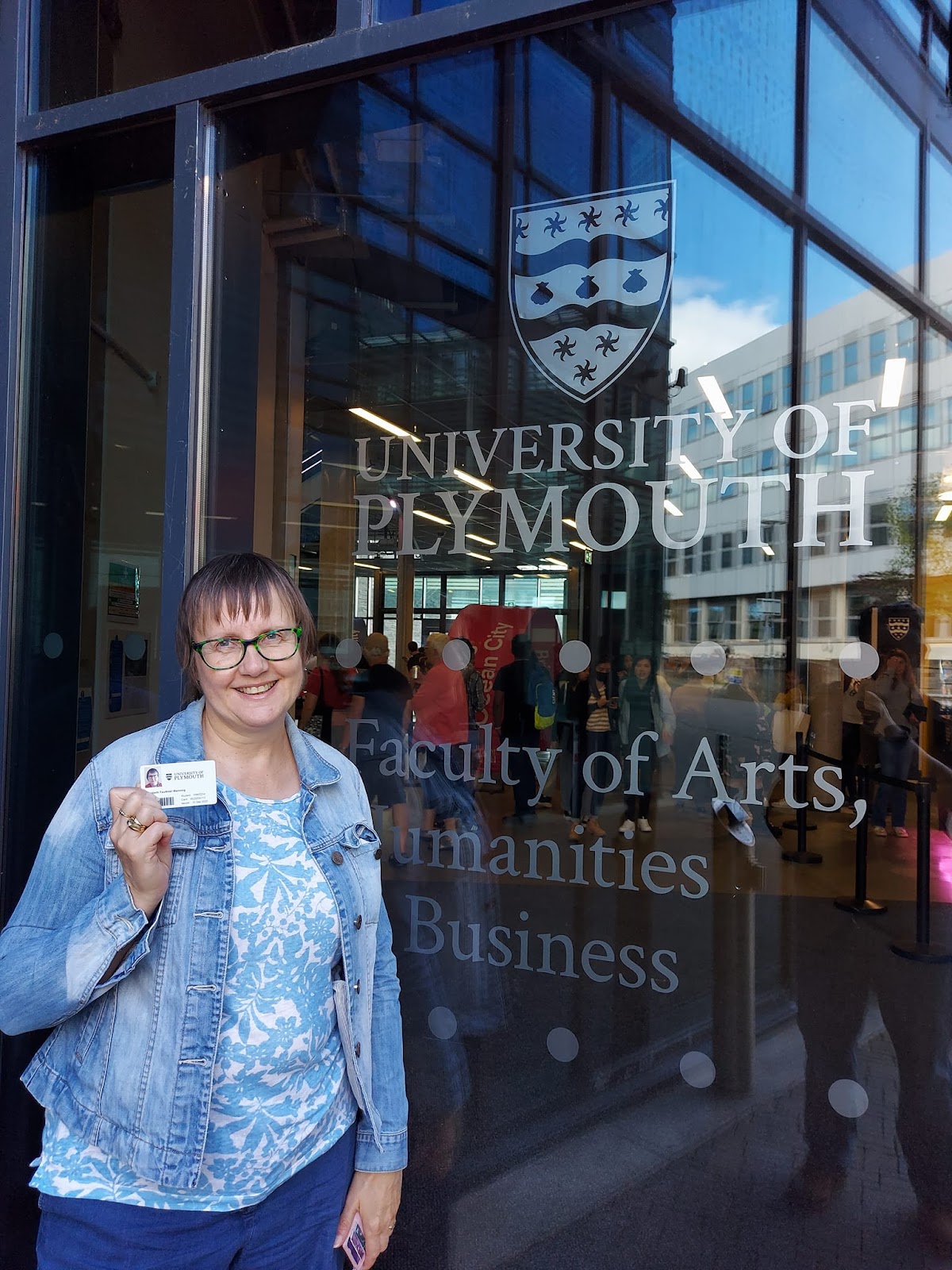
My first semester has been spent learning about Poetry and Creative
Non Fiction (that’s things like travel or food writing) and Fiction (short
stories, novels etc.). The former I started with some experience and therefore confidence,
the latter as a complete novice. But the learning on both has been exponential.
Fiction has felt like a hard climb – and I know I am still
in the foothills. But I’m going to keep going with it, having learned an important
lesson about how long a novel takes to write! Poetry has felt more like being
pushed off a cliff and letting the air currents take me where they will; it’s
been exhilarating.
Each end of module assignment has consisted of a creative
element and a critical reflection.
For fiction, I have the opening chapter of a novel. I’m
weaving together elements from my previous patients with moments from my dad’s
life, amalgamating details from different care homes I’ve visited into my main
setting, blending names and situations from people I grew up with, and binding
it all together with a good dose of imagination. So there are elements of real
life, or ‘emotional verisimilitude’ as my tutor prefers to call it, but it’s a
work of fiction rather than a memoir.
For my critical reflection, I’ve delved into the ‘dementia genre’,
which I didn’t even know existed before. But what a wonderful set of books I’ve
‘had’ to read as a result. I’d recommend Back to Blackbrick and Goodbye,
Vitamin for a start. I’ve found some fascinating research on what techniques
authors use to depict characters with dementia effectively. Flashbacks
triggered by environmental factors and using the present tense to heighten my
character’s sensory and emotive experience have been added to my professional knowledge
of disorientation and disinhibited language.
I’ve written a small collection of reflections on various
Psalms for my Poetry submission. My tutor encouraged me to include my faith in
my writing and I was gratified by how positively this was received by my fellow
students (half of each weekly seminar is spent critiquing each other’s work).
But I found – and here’s quite a confession for a writer –
that often words weren’t enough. So I have entered the world of multi-media and
become an ‘artist-poet’, which is strange because I never considered myself
good at art. What that means is I’ve used simple techniques like laying out
text at different sides of the page to suggest a conversation. Or more complex
ones, like a PowerPoint labyrinth, or Psalm 23 as a tourist map, or Bible study
notes combined with an anatomical diagram for Psalm 22.
I can see that these descriptions probably sound weird. But
by integrating other media into my work, I can put my words in more context,
suggest other ideas, and make my poems more interactive.
So now I’m onto new modules (Dramatic Writing and the Business
of Publication) before my dissertation – more multi-media poetry with hopefully
an exhibition at the end. I
hope you’ve found it
interesting to hear a bit about my MA in Creative Writing experience. And I’d
love to know what your solutions are when words seem insufficient.
Khong, R. (2017) Goodbye, Vitamin. Simon &
Schuster.
Moore Fitzgerald, S. (2013) Back to Blackbrick. Orion
Children’s Books.
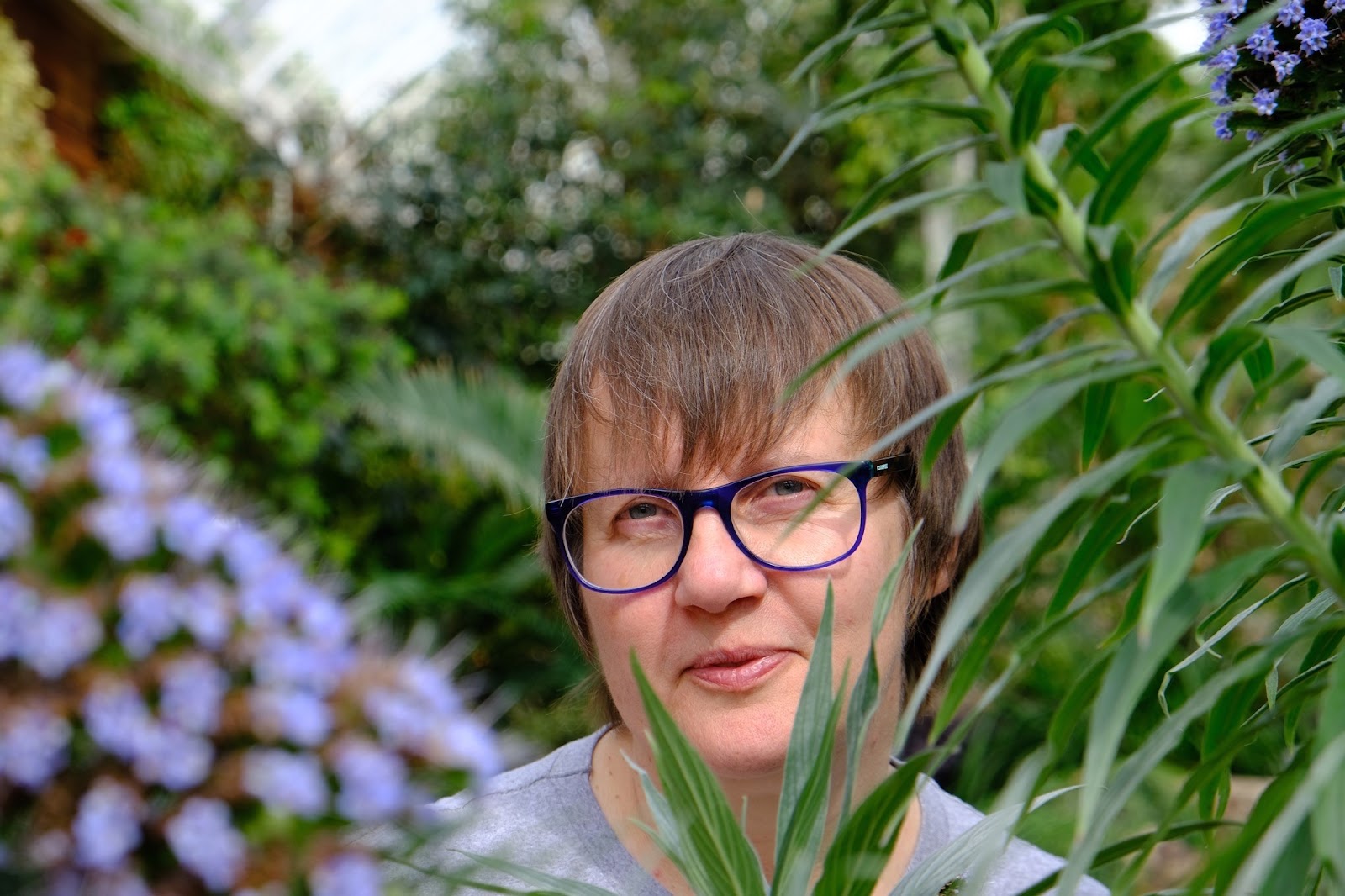
Liz Manning lives in Cornwall and is doing a Creative
Writing MA at Plymouth University, where she’s exploring fiction, poetry, and dramatic
writing possibilities. She hopes to have something ready for publication by the
end of the academic year.
She blogs regularly at https://thestufflifeismadeofblog.wordpress.com/

