

WORSHIPPING AND
WORLDLY ME
Sometimes I feel like two
people— the one who acts like a committed Christian and the worldly one. Even
when I’m writing godly books, my thoughts are on marketing them.
So, which is the real me? The
one who writes for Him? Or for herself? The one who is riddled with guilt that
she doesn’t do enough spiritually and practically for her faith?
To feel authentic, I need
connection to God.
EVERYDAY THINGS
But everyday things so often
get in the way.
Can you relate to this?
I want… I need to set aside time to
appreciate
·
God’s creation,
·
My family,
·
His blessings,
·
My journey
OCEANS OF TIME

I need shabbat shalom— Sabbath
peace. Orthodox Jewish writer Blu Greenberg describes the sabbath as ‘oceans of
time’. She cautions that, ‘Oceans of time don’t happen by themselves.’
She gives the example of her own
preparations for the Jewish sabbath, a day every week when observant Jews won’t
open their shops— even though it’s Saturday and potentially the best trading
day of the week.
Blu will have invited family,
considered her menu, shopped for ingredients, cooked, prepared a beautiful
table in order to be ready for the beginning of
Shabbat at nightfall on a Friday.
It lasts until there are three stars
in the sky on a Saturday. This echoes the time that God rested from all His
work, following His creation of the world in Genesis 1. Since the text reads:
‘It was evening, and it was morning, a first day,” and so on, Jewish days begin
like God’s in the evenings and last until the following evening.
SABBATH REST
The requirement to keep the sabbath
is the fourth of the Ten Commandments: “Remember
the Sabbath day by keeping it holy. Six
days you shall labour and do all your work, but the
seventh day is a sabbath to the Lord your God. On it you shall not do
any work, neither you, nor your son or daughter, nor your male or female
servant, nor your animals, nor any foreigner residing in your towns. For in six days the Lord made the heavens
and the earth, the sea, and all that is in them, but he rested on the
seventh day. Therefore, the Lord blessed the Sabbath day and made it
holy,” (Ex
20:8-11) – my underlining.
What are we supposed to do with our Sabbath rest?
I think that depends on what we need. But take it
we should. And my previous faith, Judaism has some pointers to help us.
I have spent many a Friday celebrating the
Sabbath with family. There is great beauty in the rituals that we go through.
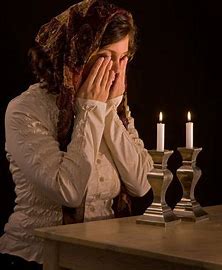
First, we light the sabbath candles, all the
females together, hiding our eyes from the candles we have kindled, as we recite
the blessing in Hebrew over them— then taking away our hands to enjoy the
‘surprise’ of seeing the shabbat lights burning.
REST AND RE-ENSOULMENT
The host or senior male will then read from a
siddur, a prayer book: ‘6 days you shall labour and on the 7th
day Shabbat
vayinafash,’ a sabbath of Rest and re-ensoulment, through an eternal covenant
from God, from generation to generation.
Next comes kiddush, which means sanctification: a blessing over the shared wine cup that is
passed around, a blessing over the twisted challah, semi-sweet bread that is
torn and dipped in salt as it is passed around. The letters in Hebrew of salt melach,
are the same as those for forgiveness, machal.
At the Last Supper, Jesus used kiddush
as inspiration for what has become Holy Communion, reversing the order of the
wine and the bread. It has been suggested to me that this was to emphasize that
he was the Bread of Heaven whose blood was spilled.
Through these spiritual acts in the
home, a threshold has been crossed, marking a time that is different from the
rest of the week: shabbat shalom.
WELCOMING THE SABBATH BRIDE
Those who welcome in the sabbath at
synagogue on a Friday night will turn towards that door as we sing L’cha
Dodi, Arise the Bride. The sabbath is considered a beautiful bride, fresh
and pure and beautifully adorned. We imagine her coming through the door, into
our presence.
Another threshold.
There may follow a chavurah shared
supper. Chavurah means fellowship.
For this, too, we need to plan what
we will bring and how we will help.
HAVDALAH
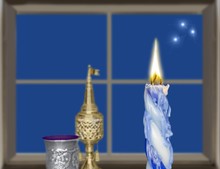
At the end of the sabbath, the return
to everyday life and the transition to everyday life is marked through Havdalah,
which means ‘separation’. A candle with several wicks is lit. Another shared
cup of wine is lit. We smell sweet-smelling spices.
EMBRACING THE CHRYSALIS

In Mark 4, Jesus tells the parable of
the farmer who prepares the land and sows. Later, he harvests, But in-between,
when he does nothing, God does the work, growing the seedling into a crop.
It is like the transformation of a
caterpillar into a wonderful, winged butterfly. The second stage is the
chrysalis that looks like dead time, or at least down time. But, without it,
there could be no transformation.
We need to embrace the chrysalis is
we are to grow.

Since oceans of time for rest and
re-ensoulment do not happen on their own, we need to understand that we must
stop, listen to God and submit to Him.
We do that through preparation and
marking thresholds:
·
Begin with
ritual.
· End with ritual.
·
In-between, seek
God.

Bobbie
Ann Cole is a Christian writer, speaker and writing teacher. She runs a number
of free groups for fellowship and learning. You can take your pick of them at http://ahava.space.
She also writes a blog/vlog. Read her posts and get her free teaching MORE THAN A MOM, The Legacy of some strong and
spirit-filled Bible women at http://scrollchest.com.

