
With thanks to members of my free Yeshua Group International Online. This piece
is a result of our discussions on Oct. 29, 2022.
No one has ever seen God, but the one and only Son, who is himself God and is in closest relationship with the Father, has made him known. (John 1:18)
In Christianity, we believe in the Trinity, one God of three
facets:
·
God
the Father,
·
Jesus
the Son,
·
The
Holy Spirit.
Understanding how three can be one is not straightforward. We can say that God is like water, which can
be seen:
·
Flowing
·
As
ice
·
As
steam

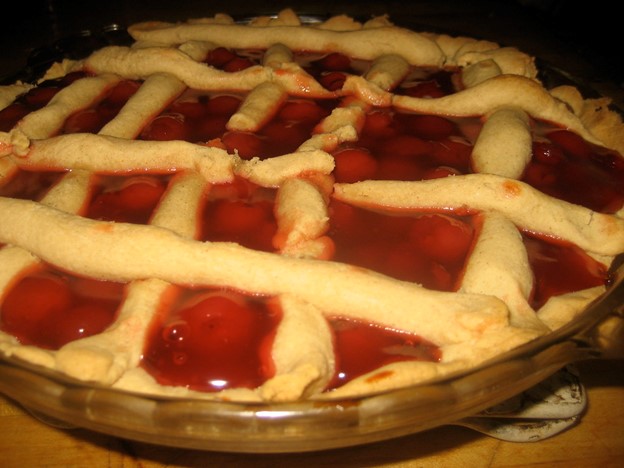
God is also like cherry pie sliced in the pie tin. It
may look like there are three distinct pieces yet, beneath the outer crust, it oozes
together, remaining one pie.
Judaism, from which Christianity was born, insists
there is One God and scorns Christians who believe in three Gods. The
closest thing to Jewish doctrine, the Shema, recited by
observant Jews daily, affirms this:
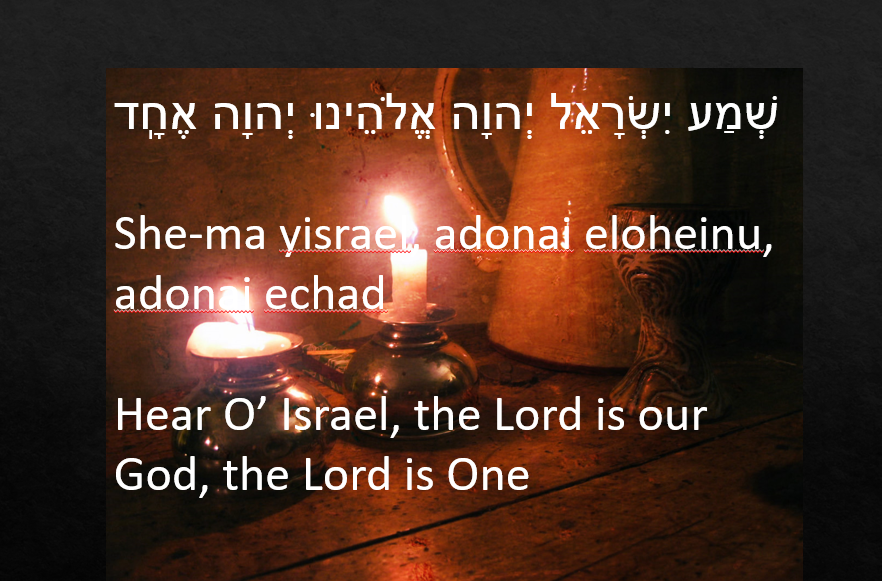
Shema Yisrael Adonai
Elohainu Adonai Ehad
(Hear O Israel,
the Lord our God, the Lord is One)
Read on, however, to see that things are not quite so
clear cut as Judaism would have them be.
Elohim
Right from the Bible’s
get-go, there is an issue. Gen 1:1 says:
B’reshit bara Elohim et ha shamayim v’et ha-aretz
In the beginning, God created the heavens and the
earth.
The verb for
created ‘bara’ is singular, as you would expect for One God.
However, the word for God, Elohim, is a plural.
In the very next verse, Genesis 1:2, we see this
plural repeated: the Ruach Elohim (‘Spirit’, singular, ‘of God’, plural)
hovered (singular) over the deep.
Let us Make Man In Our Likeness
There have been
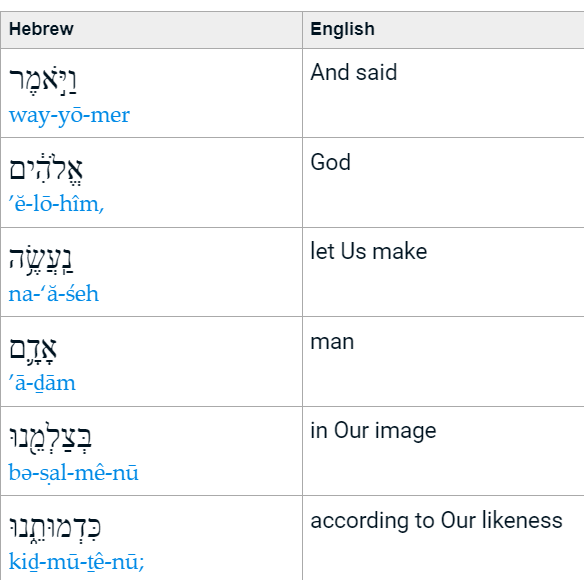
many attempts to annihilate or explain Gen. 1:26 which says:
“And God said: Let us make man in our
image, after our likeness”

(from Biblehub.com)
·
According
to Jewish tradition, the Septuagint translators, translating the Hebrew Scriptures
into Greek, were embarrassed by the plural pronouns in this verse. So, they
changed, “let us” to “let me.”
·
Medieval
Rabbi Joshua ben Levi suggested God was like a king, in
the habit of taking advice from two counsellors in Heaven.
·
Another
medieval rabbi, Rabbi Ibn Ezra, decided the active “let us make” (na’a’seh)
should be changed to a passive “there is made” (niphal).
·
Other
commentators suggested that the phrase “in our image, after our
likeness” was a postscript, added by Moses, rather than the actual words of God.
Other famous rabbis like Nachmanides and Rashi have tried to rationalize this apparent biblical anomaly. You can find out about them at A
Look at the Trinity From a Messianic Jewish Perspective – Jews for Jesus.
Who Will Go For Us?
There is a further
plural reference around God in Isaiah 6:8,
when, “the voice of the Lord (is) saying (to Isaiah), ‘Whom shall I send and who will go for
us?’” (lanu = for us).
Judaism also believes in a separate facet of God:
His Presence: The Shechinah
I was taught by a female rabbi that the feminine noun Shechinah was
the feminine aspect of God. Rabbinic literature, which does not mention this, tells us repeatedly that the
Shechinah is God’s Presence that filled the Tabernacle and the Jerusalem
Temple.
It is also present:
•
While
a person (or people) study Torah
•
Whenever
ten are gathered for prayer
•
When
three sit as judges
•
“The
Shechinah dwells over the head side of the sick man’s bed”,
•
“Wheresoever
they were exiled, the Shechinah went with them.”
•
“A
man and woman – if they merit, the Shechinah is between them… When a married
couple is worthy of this manifestation, all other types of fire are consumed by
it.” (This would seem to refer to the holy spirituality that can exist between a married couple.)
I was surprised to learn that the Shechinah is not actually mentioned in the Bible. However, it features in the daily Amidah prayer whose
17th blessing concludes: “Blessed are You, Lord, who returns Shechinato,
(His Presence) to Zion.”
This
prayer is very ancient and would most likely have been recited by Jesus.
The Talmud, which is the oral law, written down
around the 2nd century, states that “the Shechinah rests on man
neither through gloom, nor through sloth, nor through frivolity, nor through
levity, nor through talk, nor through idle chatter, but only through a matter
of joy in connection with a mitzvah.”
A mitzvah is a commandment to do good.
Doesn’t this sound a lot like the Holy Spirit?
Conclusion
The simplest way for
Judaism to explain all these plurals of the Divine, including the Shechinah, would be
to suggest that they are facets of One and the Same God, as Christianity does.
It does exactly that.
The
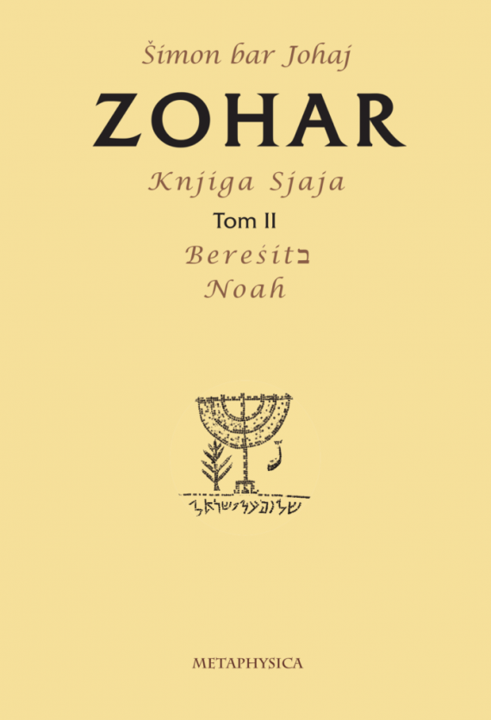
Zohar, a book of Jewish mysticism first published in the 13th
century, goes so far as to say:
“Hear, O Israel, Adonai Eloheinu Adonai is
one. These three are one. How can the three Names be one? Only through the
perception of faith; in the vision of the Holy Spirit, in the beholding of the
hidden eye alone.…So it is with the mystery of the threefold Divine
manifestations designated by Adonai Eloheinu Adonai—three modes
which yet form one unity.”
Zohar II:43b

Christian writer,
speaker and writing teacher, Bobbie Ann Cole is running a free online workshop on
November 22nd and you are invited.
FLESH ON BAREBONES will explore how we can use the
ancient technique of midrash to fill out the Bible’s spare stories and
create our own, whether biblical or secular.
Our interactive
session will focus on the story of the Wedding at Cana. Find out more at http://fleshonbarebones.com.

