
Poetry’s
place as part of mainstream Christian worship practice has perhaps not always
been fully recognised or appreciated in the past. Certain events, such as
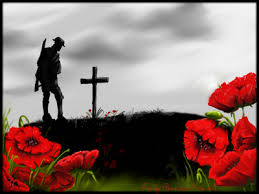
Remembrance Sunday which this year falls on November 14th, have
traditionally included poetry readings such as Wilfred Owen’s, Dulce et decorum
Est or John McCrae’s hauntingly beautiful, In Flanders Fields.
In recent
years however poetry has begun to feature more and more in services outside Remembrance
both in traditional but also more modern styles of worship. As a Methodist
Worship Leader, I sometimes include poetry within my services but not always where
you might expect.
an Epiphany service I led in January 2020 (definitely pre-pandemic), I read the
poem Ballad of the Bread Man by Charles Causley (1917-2003) which is his
take on the Gospel stories from the birth of Christ and the epiphany, through
to his crucifixion and resurrection but using modern imagery and language. Some
may question the appropriateness of it but my reasoning then – and still – is that
we should not be afraid to find new ways of sharing God’s Holy word if it
resonates with those who may find traditional liturgy stifling or even dare I
say it – boring!
literature has had more than its fair share of poets who were also Priests from
John Donne (1572-1631), George Herbert (1593-1633), Gerard Manley Hopkins (1844–1889) R.S Thomas (1913-2000) to modern Poet/Priests
such as Malcolm Guite (b.1957). There have also been poets who have written
about faith and spirituality in their work, one of my favourites being the Victorian
poet Christina Rossetti (1830-1894), who is most famous perhaps for the poem In
the Bleak Midwinter later set to music and now a popular Christmas Carol.
Sir John Betjeman (1906-1984) was a modern 20th century poet who also
liked to reference his deep Christian Faith in his work particularly with
regard to his beloved Cornwall. Any and all of these poets and their works could
be deemed suitable for use in worship given the right occasion.
Remembrance Sunday I usually use as my text Matthew 6:25-34 with its theme of, “Do
not worry about tomorrow.”
In this reading Jesus tells his disciples that worrying will not
add a single hour to your life (v.27) and worrying about clothing is likewise just
as futile (v.28). The use of the metaphor of the lilies in the field is
intended to show that their beauty is such that not even Solomon in all his
finery could compare with them (v.29) but yet – can easily be destroyed by a
God who if we allow, can clothe us in something far more substantial despite
our lack of faith (v.30).
Verse 34 is key to this text; “Do not worry about tomorrow, for tomorrow will bring
worries of its own. Today’s trouble is enough for today.”
one which has been a constant throughout the ages up to and including today,
yet we still seem unable to grasp it fully.
For those of a pacifist persuasion,
Remembrance Sunday is often challenging and will prefer to use in worship poems
where love, peace and reconciliation are the central themes. While we have the
luxury of hindsight some 80-100 years later to debate the justification or not
of those conflicts this country participated in, what we can say is that whatever
the circumstances, there were those who stepped forward in that moment in time –
today’s troubles – who saw it as their duty to do so in the hope of better
tomorrows.
One such was Geoffrey
Anklett Studdert Kennedy (1883-1929), an Anglican priest who served as a
chaplain in the trenches on the Western Front in the First World War. Better
known by his nickname of Woodbine Willie, for his habit of handing out
cigarettes to the soldiers he ministered to. He was also the recipient of the
Military Cross and was known for his habit of going into no-man’s-land
in the thick of a battle, to comfort wounded soldiers. He was also a poet and
wrote arguably his most famous work, Solomon in all his Glory, based on this bible
reading from Matthew. In this, he saw the torn and bloodied Khaki uniforms of
wounded and dying soldiers as being worthy of comparison with the beauty of the
lilies of the field and of Solomon in all his glorious finery, and how in the
noble cause of duty and sacrifice, they became like the bloodied robes of Jesus
Christ.
Solomon in All his Glory
Still I see them coming, coming
In their ragged broken line,
Walking wounded in the
sunlight,
Clothed in majesty divine.
For the fairest of the lilies
That God’s summer ever
sees,
Ne’er was clothed in
royal beauty
Such as decks the least
of these.
Tattered, torn and bloody
khaki,
Gleams of white flesh in
the sun,
Raiment worthy of their
beauty
And the great things they
have done.
Purple robes and snowy
linen
Have for earthly kings sufficed,
But these bloody, sweaty
tatters
Were the robes of Jesus
Christ.
part of Remembrance Sunday reflections as well as in Bible studies and in monthly
devotions at this time of year and I’m sure others have too.
format or style or occasion does have a place in our faith and worship
practices not just on Remembrance Sunday important though it is. Whatever your interest
in or knowledge of poetry, there is plenty of suitable material which can be adapted
for use in worship throughout the year if you so choose, and there are innumerable
resources available in both Christian and non-Christian publications, so get
googling.
Michael
Cronogue originally from London now resides in Walsall in West Midlands region
of UK. Writer and blogger discussing matters of faith and theology on his website
www.michaelcronogue.com
He is also a regular
contributor to Black Country Urban Industrial Mission (www.bcuim.co.uk) writing on workplace chaplaincy
issues. He blogs creatively at
https://blackcountrylondoner.wordpress.com

