It is easy to confuse our opening
situation with our premise.
 |
| A premise is the compass that guides us from start to resolution |
An opening situation is a teaser we
might dangle:
person / problem / now what?
A premise, on the other hand, tells our
whole story in 1-2 sentences:
person with problem / tries to fix / outcome.
Our premise is also different from our
story message—the important truth we want our reader to take away from our story.
The most elegant premise that I was taught is that of The Godfather:
A younger son is reluctant to join the family business,
but is persuaded to do so.
In the movie, Michael wants to be a
lawyer with a WASP wife, but his Sicilian honour-shame values and family loyalty
force him to take over as his father’s successor.

Not knowing our opening situation, message
and premise before beginning writing is like jumping in the car and driving
away, without knowing why, or where we are going.
These elements are often really hard
to work out, however. We weave a story in our heads around a situation, setting
or character and are eager to write it, so that we can inhabit the place where Inspiration
has taken us. (Capital letter intentional. Isn’t all inspiration from God?)
I like to
write an outline. My premise helps me with that. A premise is the compass that guides us from start to resolution. If outlining is not your thing,
a premise will be even more valuable: it will prevent you drifting off topic.
As an exercise, try discerning the premise
of a book you have read, a film or a Bible story. Start with the main character
and their story problem and add the resolution. This is not always obvious. But
it is fun.
Working out the main character’s story problem and resolution is fun
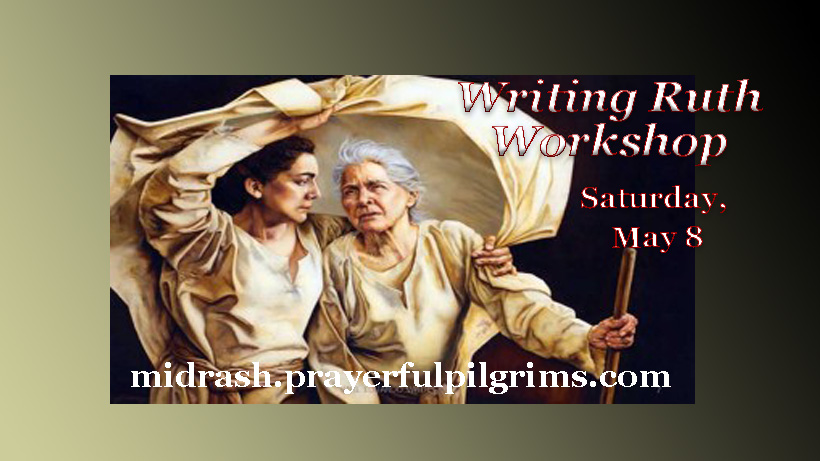
This is one element of my Writing
Ruth One-day Workshop next Saturday. I’m expecting a variety of premise
suggestions, because there will probably be no consensus over whose story the
Book of Ruth is.
There are several possible story problems
Ruth could have, if you think she is the main character. If it’s Naomi, her problem is that she has no heir and two
foreign daughters-in-law in tow You could
choose Boaz. He needs an heir, too. And Naomi’s late husband, Elimelech, who doesn’t even appear
in the story, is a contender.

Bobbie Ann Cole is a Christian writer, speaker
and writing teacher.
Her one-day online workshop WRITING RUTH is this
Saturday, 8th May, We will address struggles with story world, creating authentic
characters and defining our story message. You will have a chance to write and share your own piece of Ruth writing, too.
Sign up by Wednesday 5th May at http://midrash.prayerfulpilgrims.com/