
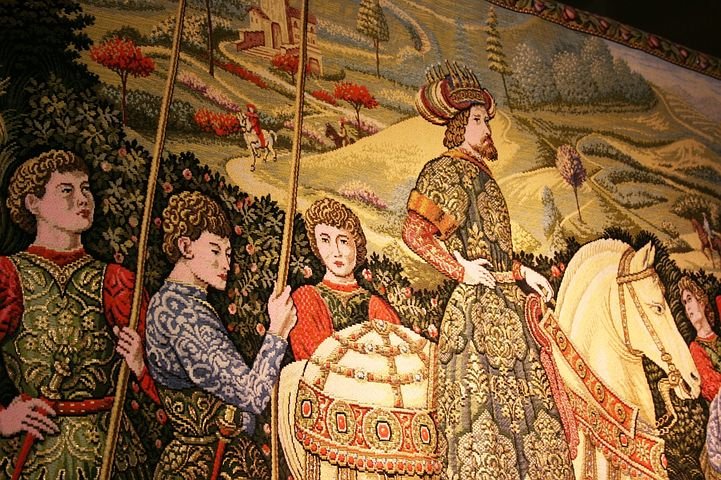
I don’t know how
much you know about the ancient art of tapestry. I’ve been to Bayeux and seen
its famous example and I own Carole King’s masterpiece on vinyl. Last year, I
wrote a blog for MTW about one of my favourite novels, Edith Wharton’s “House
of Mirth” and the scene where the heroine realises that her slow slide down the
social scale has brought her to a place where she can see all the hanging
threads and loose tufts behind the assiduously woven picture of polite society.
You could say I’m
a big tapestry fan, and that wouldn’t be too far from the truth. It’s an art
form, difficult to do, but which produces a beautiful picture when done right.
It’s weft-faced weaving, and all the warp threads are hidden when the whole
thing is complete, unlike your standard woven textile where you can see both
warp and weft. That takes some skill.
Since lock down
began, I’ve been to an awful lot of book launches. They’ve all been online, and
they’ve all been awesome. As if it wasn’t difficult enough to find the right
wool and then weave your tapestry, now we writing folk must also wrestle with
technology in order to share our beautiful creations. A few months ago, I
received an invitation from Tracy Williamson to attend her book launch of the memoir
she co-wrote with Marilyn Baker, ‘A Beautiful Tapestry – Two Ordinary Women,
One Amazing God, Many Lives Transformed.’
“A tapestry?” I
thought. “Two ordinary women? Sign me up!”
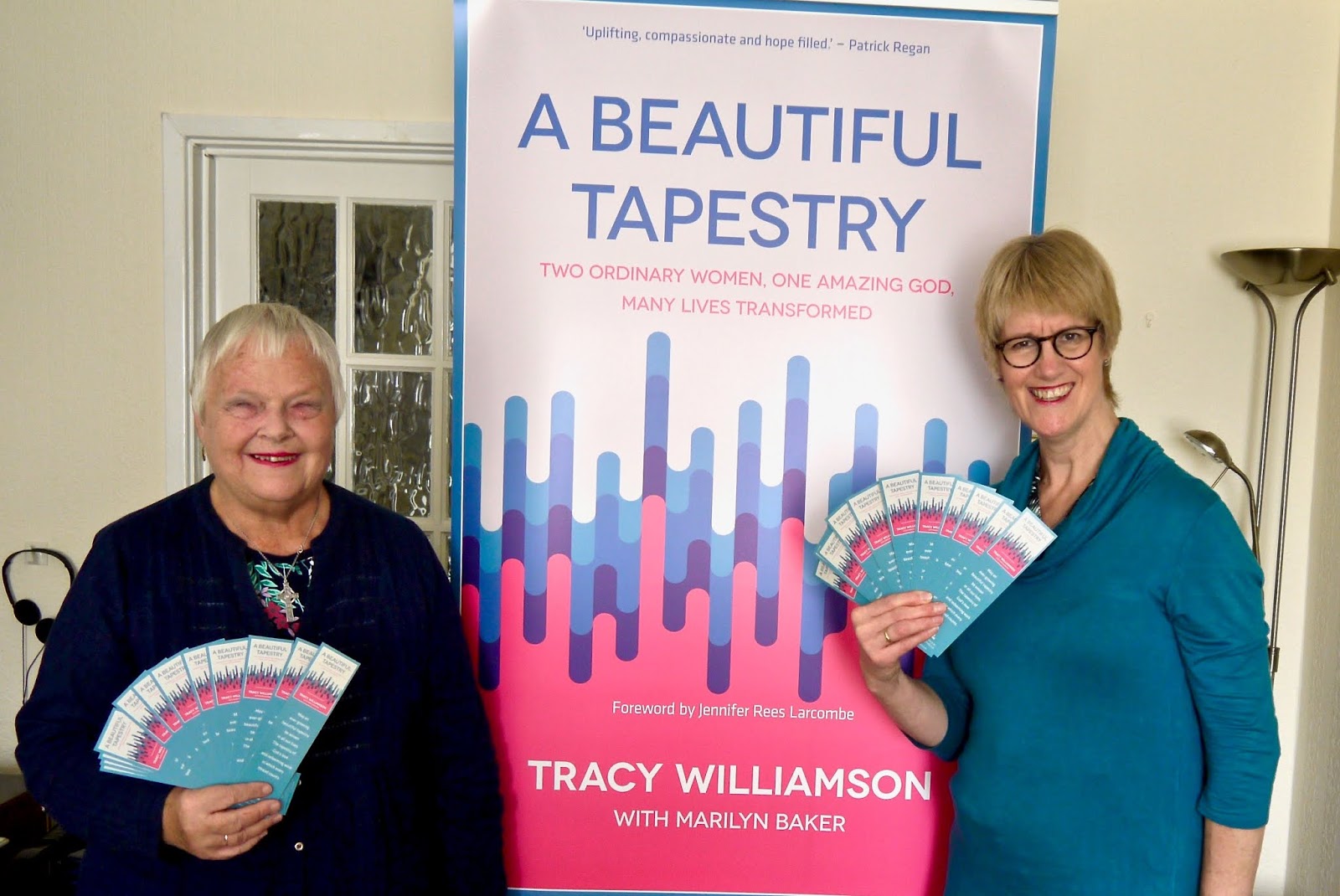
was great. I bought the book. One of my favourite things about being a member
of ACW is that you see a name on the page, you start to interact, then one day
you chat and find you have things in common and suddenly, you’ve got a new friend.
This is how it was with Tracy and me. I started reading the book and realised
that many of her warps and wefts are the same as mine. We had shared experiences.
Reading some parts of the book were painful. Some of it made me laugh. I could
see that a very skilled writer had applied her art to weaving a tapestry which
illuminated some dark corners while being uplifting and encouraging at the same
time. I was intrigued at the way she’d done it, so I decided to ask her some
questions.
What was the
starting point for the book?
Authentic Media wrote to ask Marilyn if she would be interested in writing her
memoir. At this point I’d been working with Marilyn for 33 years and ironically,
we’d often said that we should write a book of all that had happened over the
years and the hair-raising situations we sometimes found ourselves in with
Marilyn being blind and me deaf and partially sighted! But Marilyn didn’t feel
she could write it herself. I then wondered if it would work as a combined
memoir looking at both our childhood stories, how we’d come together as friends
and then some of the things that had happened since. I would be the principal
writer with Marilyn contributing her memories. We put the idea to Authentic,
they liked it and we were off!
How did you find
co- writing it with Marilyn?
wasn’t the easiest! Marilyn had had a book ghost written called Another Way of Seeing which went through her childhood years and shared
how she’d trained in music before stepping out in faith to become a full-time
singer/songwriter. The problem was that was a full book (now out of print) and
I needed to get her story condensed into about five short chapters. Marilyn
would email me blocks of text with the parts of her story that she wanted to include,
and I’d have to combine them with some of the stories from Another Way of
Seeing to get flow and depth to the story. I’d then read it to her for her opinion,
but my deafness complicated the process because she’d then have to type her
responses otherwise, I wouldn’t hear them. We emailed our supporters and asked
for their memories of things that had happened when we’d visited their churches
or when they’d been part of our events. It took a lot of deliberate sitting
down and going through things together which took time quite apart from the
time spent writing and then editing!
hardest thing about the process?
I found
it was hard to revisit my childhood years and share them on paper. My early
experiences were tough, but I knew that while I couldn’t go into them in depth,
I still needed to show what had happened in my life to make me the person I am
today. I had to really pray for the Lord’s help and wisdom every step of the
way and sometimes make time to receive his comfort and healing when hard
memories came to the fore.
your favourite comments so far?
one of the most frequent comments was, ‘It really made me laugh.’ Non-Christians
have said how much they love it which is awesome. Our prayer that it would be a
book to bring hope and joy seems to be happening and we are so thankful for
that.
read a book, then put it down and forget about it. This one stayed with me, and
I was fascinated by the writerly know-how that had gone towards weaving two
disparate stories together to make one beautiful, harmonious whole. Often, I
would have to put the book down and take a moment to regroup, as reading a
particular anecdote transported me back to painful times of my own. The warps,
if you like. And yet in this book, Tracy managed to show the warps but in the
context of the wefts, which in turn wove one beautiful tapestry.
I learned a lot.
Each stitch, even when made with difficulty (perhaps especially so), went
towards producing something which touched me. God’s love and grace shone
through it and when I laid it down, finished, I was a better writer than when I
first picked it up.
And without ACW,
I might never have “met” Tracy or read the book. Nothing is wasted. It reminded
me, yet again, that all experiences, good and bad, can be used by our wonderful
God to heal and encourage. Warp, weft and all.

