
Having just finished reading Joy Margetts’ new book, The Healing, my mind is upon monasteries and abbeys. This post is not a review of Joy’s beautiful book – my review will appear on my own blog at scskillman.com on 16th March 2021 – but I am reminded of how there is a great interest in two areas of spirituality today, associated with cathedrals, and with monasticism.
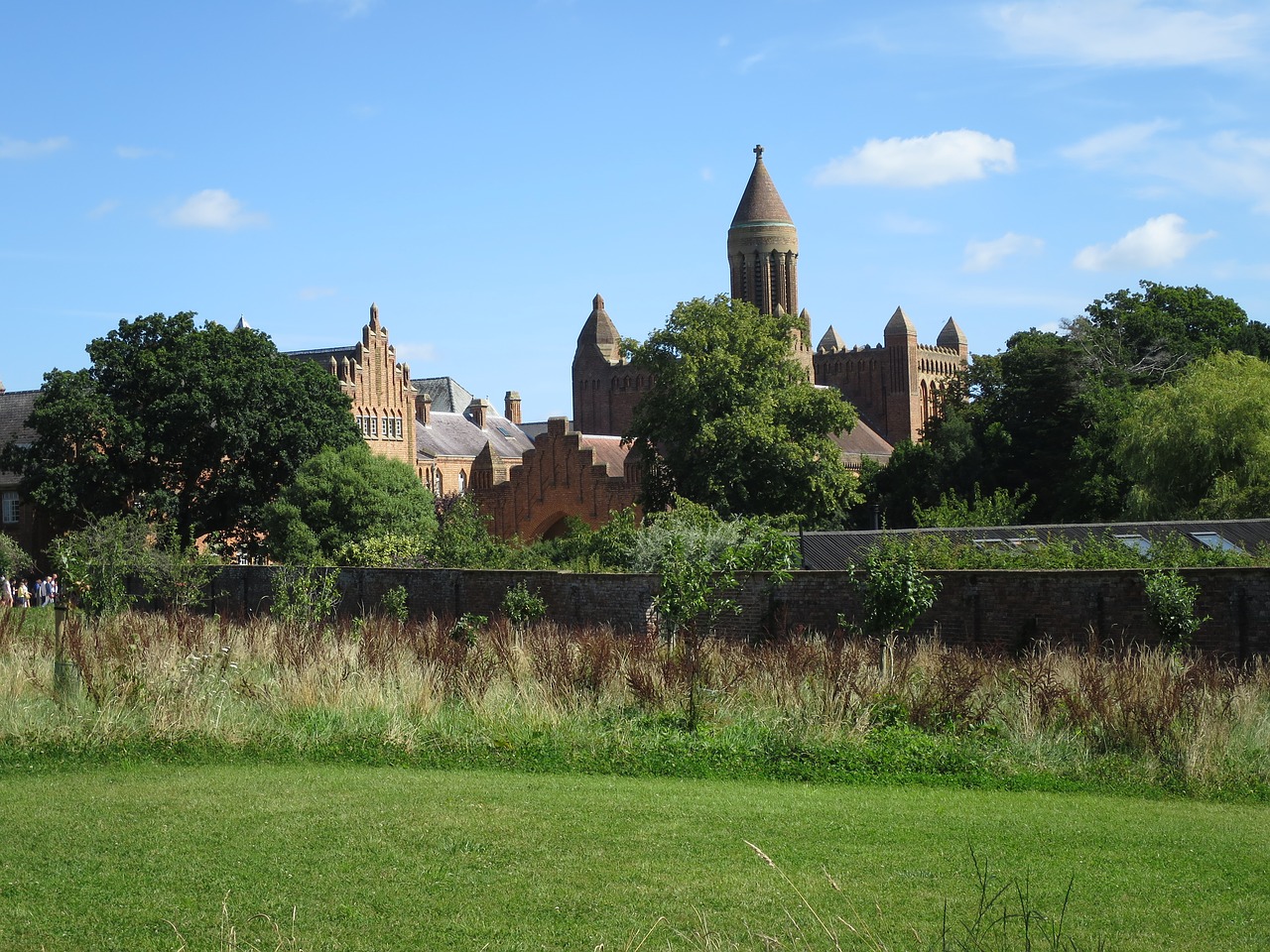
Imagine you could step into a Monastery or Abbey right now – perhaps like
the one which we saw in the 2005 TV series, or even the one in this image – and
move apart from all the frantic busyness and stress and tension of your life – yes, even in the middle of the pandemic – and receive some deep healing.
I feel we can receive something very similar at Quiet Days run by our local churches, and I remember one in the Coventry Diocese where I heard three talks from Bishop John Stroyan, Bishop of Warwick –
a man imbued in the literature of some of the world’s greatest mystics. Bishop
John speaks in a low-key way and yet treasures of spiritual wisdom
emerge almost as asides. There is no stridency, nothing is declaimed; but
those listening cannot but be aware that he speaks of the true underlying
structure which drives our behaviour, our motivation and our attitudes and the
way we react to events and circumstances in our lives.
During
his talk he referred to the Martin Luther
Memorial Church in Berlin – which he described as “the
most shocking church” he had been into. Figures of Nazi soldiers and members of
the Hitler Youth are interspersed with figures from the Nativity, and an Aryan
family of the type Hitler wanted in his Master Race also adorn the church. In
addition, a strong, muscular, Aryan Christ is seen on the cross. It’s one
of the hundred churches Hitler built, the only one that has survived,
intentionally as a chilling reminder of how evil systems can recruit the
Christian faith to their cause. Apparently, the Bishop said, both the Nazis and
the apartheid regime used Christian clothing for their causes – making God in
their images, recruiting Him to serve their agendas.
This
is a very strong warning to us, as the Bishop said: “Beware of what we think we
know.”
Some
of the wisdom the Bishop shared with us included the observation that
“you’ve faced the darkness and come through it, and God will use that as a gift
to help others who struggle.”
How
often do we see that those who have suffered the most are in the best position
to support and comfort those who now suffer in the same way?
He
said that pearls are tears shed around grit that irritates the oyster. Some
people, as we know, become hard and embittered and resentful around that grit
in their lives.
But
the Bishop spoke about the weaving of God’s good purposes through events in our
lives that we would never choose to happen. “Crises can be the bearers of
grace.”
Julian of
Norwich said, “In falling and rising again we are always held
close in one love.”
An
image the Bishop likes to use in his talks is one taken from his life as a
dog-lover. He may be taking his two dogs for a walk and when they catch the exciting scent of a rabbit, they rush off away from him, overwhelmed by the thrill of the chase. He calls
loudly for them to come back. They know his voice. And yet they practice what
we all do: “selective deafness”.
Another
image comes from the bird world. The mother eagle puts sharp pointed
uncomfortable things in the nest to make the eaglets fly. Otherwise they
would stay cosy in the nest. This is the only thing that makes them leave the
nest, take wing and soar on the thermals.
I hope we can take these images as messages for our time.

SC Skillman writes fiction and non-fiction and her latest book Paranormal Warwickshire was published in November 2020, for all those who love English history, travel photography and unexplained mysteries.

