
 |
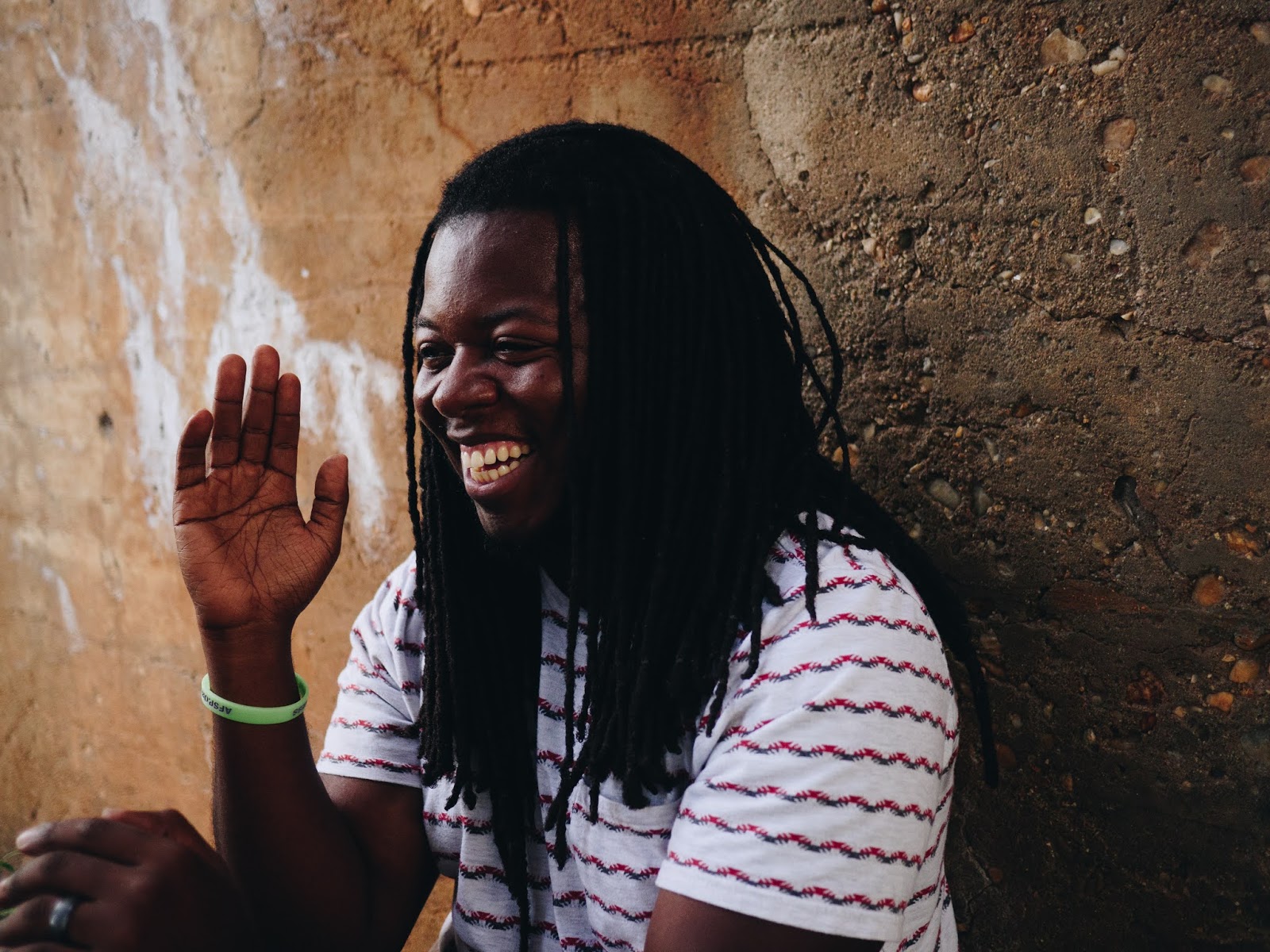
| Photo by Eye for Ebony on Unsplash |
What makes you laugh? Like really laugh, crying and maybe
hard to breathe? I had one of those moments over Christmas whilst watching the
Vicar of Dibley episode where she is engaged to be married.
I can’t promise I’ll have that same effect but I’ve been
given the honour of hosting a week of prompts for vsshumour on Twitter. It’s
from the 8 – 14 Feb, and each day I’ll share a word which people can use to
create a funny very short story.
Thinking of humour and my next blog post coming up, gave me
the idea of interviewing our very own Fran Hill. Here’s what she had
to say…
What makes me laugh most is absurdity. I have a keen eye for the
ridiculous, the bizarre and the ironic, particularly in everyday life. So, for
instance, it amuses me when I’m unpacking the shopping and find that the
tomatoes are labelled ‘grown for flavour’. That makes me wonder what all other
tomatoes are grown for. In my most recent book ‘Miss, What Does
Incomprehensible Mean?’ there’s huge irony in the fact that the main character
(me, because it’s a memoir) is meant to be in control of a classroom but is
barely in control of herself. What doesn’t make me laugh is cruel humour such as
those videos of children falling over and hurting themselves while the family
watches on and laughs. I’m not keen on slapstick for the same reason – I don’t
get the ‘clown’ thing at all.
What words do you find funny? I think some of the
funniest words in our language are those that contain what linguists call
reduplication. That’s when a sound is repeated within the word. Examples of
this are okey-dokey, boogie-woogie, shilly-shally and the heeby-jeebies. You
won’t find many of these words used in serious, sober texts such as obituaries
or in epitaphs on gravestones, therefore. We use reduplication instinctively
when we talk to babies and small children and you’ll find it in nursery rhymes
and children’s stories. Also, of course, there’s the word ‘moist’ which, as
Miranda fans all know, is a very funny word, and gets funnier the more you say
it.
tip would be to write humour not by adding ‘jokes’ into an otherwise serious
piece of writing but by letting humour come naturally from funny characters and
funny situations. For example, take a doctor who is frightened of blood or a
vet who hates animals as your character, and that will inevitably lead to funny
scenes as they try to cope. A second tip would be to read the work of writers
who make you laugh or watch their sketches/plays/sitcoms and think really hard
about what you find funny. Is it because of a twist you weren’t expecting? Is
it because of the interaction between two contrasting characters? Is it because
of the repetition of a tag-line? Write down what you observe.
time. I think God has a huge sense of humour and some of the biggest ironies in
the world are divinely-inspired. You only have to look at the gospel story – a
baby comes from a poor, unknown family to save the entire world. Or, take the
parables of Jesus and their bizarre imagery, or his wisecracks about the
Philistines. Some stories are also hilarious: one of my favourites involves the
donkey who backchats its master, Balaam, and another is the story of Eutychus
who falls out of a window because Paul’s preaching has bored him into
unconsciousness.
It’s not only possible: it’s one of the only ways to survive. ‘If you don’t
laugh, you’ll cry’ is one of those sayings that holds a profound truth.
Laughter and tears are sometimes hard to differentiate. Adam Kay’s book ‘This
is Going to Hurt’ about his life as a doctor is a great example. He recounts
often tragic stories about patients and his interactions with them with
enormous humour and irony, demonstrating that, in challenging professions such
as medicine, it’s the only way to cope. We call it ‘gallows humour’, don’t we,
for a reason? I suppose God gave humanity humour to help us cope with the mess
He knew we would get ourselves into.
Fran Hill is a writer and teacher from Warwickshire. Her
latest book ‘Miss, What Does Incomprehensible Mean?’ is a funny teacher-memoir
written in diary form. It charts a year in her teaching life and demonstrates
that it’s not only the students who misbehave. Find out more about Fran’s work
on her website www.franhill.co.uk
Thanks very much, Fran!
I’d love to hear your favourite funny word and what makes
you laugh. Let me know in the comments or on Facebook.
Martin is a writer, baker, photographer and storyteller. He’s been published in the ACW Christmas anthology and Lent devotional. He’s currently honing his craft at flash fiction and you can find him on Twitter here.

