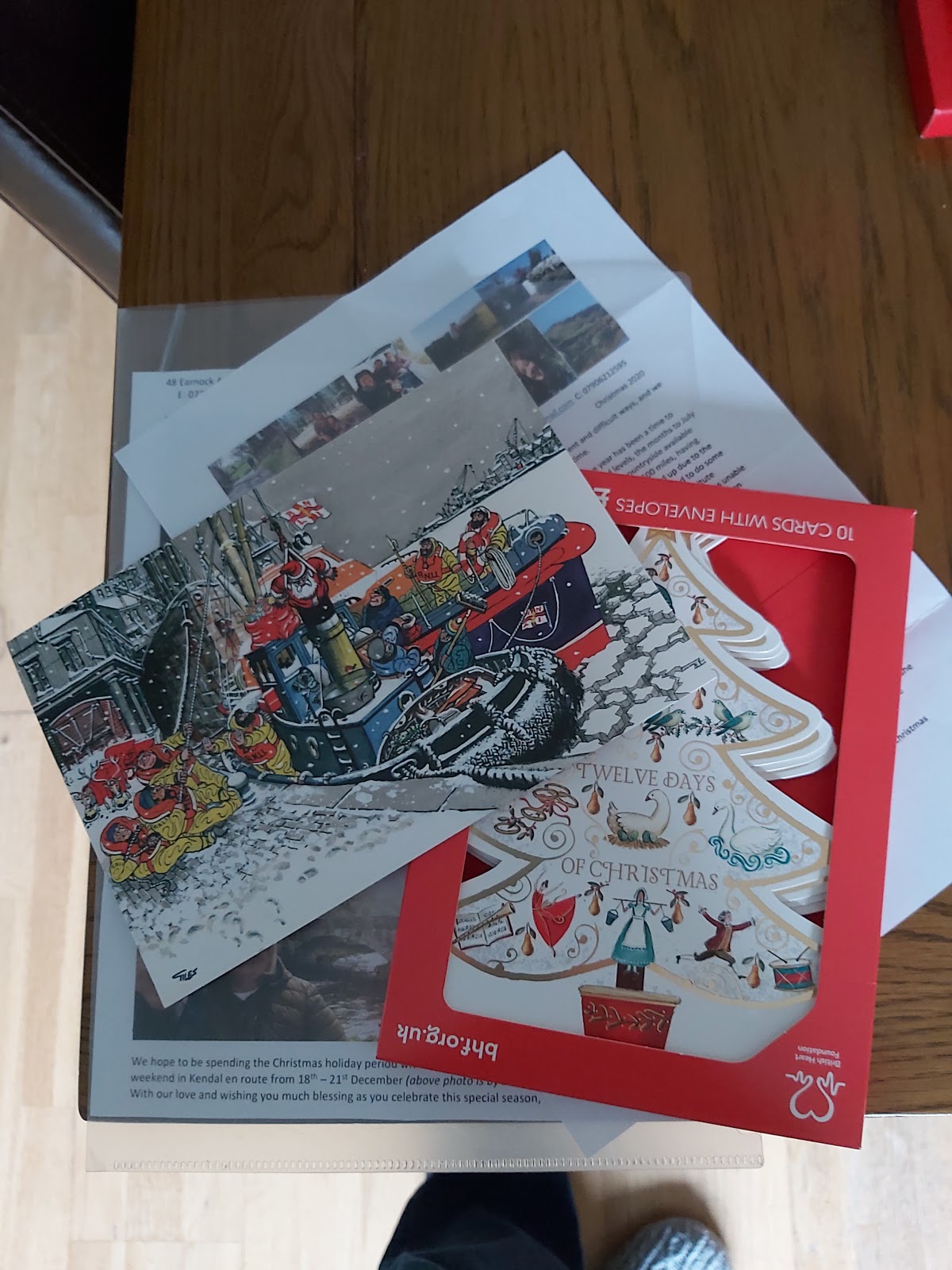
Friends, I have a confession to make. Don’t tell anyone (puts finger on lips and emits a loud shhh-ing sound). I feel embarrassed to tell you, particularly in view of Nikki Salt’s wonderful post here about hand written letters, which I fully agree with by the way. Ok, I’m screwing up the courage. Are you ready? (shuts eyes tight and speaks quietly from behind hand.)
I write a Christmas newsletter.
Aaargh! There I’ve said it. I don’t often write personal messages on Christmas cards. I write an annual newsletter which we put in most of our Christmas communications. Not all. Not if they’re close friends who know all our news already. But also, if people generally don’t send us newsletters, I tend not to send them one, my reasoning being (perhaps wrongly) that they might not write one because they find other people’s annoying. And I totally get why they would. Here’s why my Christmas letters might have been annoying in the past: –
- They can come across as smug
- They can be long, like leafing through a three foot pile of holiday snaps
- They can contain badly printed photos that you can’t see without a magnifying glass
- They can shed bits of festive glitter that clog up the hoover
- Their jollity makes you feel a bit resentful
So, if I know how annoying they can be, why do I write them? Well, we have lived in many different places including overseas, worshipped at a number of different churches, are both serial job-hoppers, have friends and family all over the world, and love them all. In short, if I want to keep in touch with the people we’ve made memories with, given the craziness of manse life at Christmas, there really is no other option. I want to update them about our lives because I hope they will do the same for me.
Over the years, I’ve tried to be inventive with the letters, I really have. I’ve turned our family news into menus, school reports, newspaper articles, a shipping forecast, a tiny paragraph full of bullet points. My husband was worried no one would understand the shipping forecast one so I included a link for non-Brits…
However, after racking my brains endlessly about how to make this year’s newsletter more palatable, I came to a decision. Firstly, if these people love me (and I trust they do), they won’t care what shape my news comes in. They will just be glad to get it, as I am to get theirs. Also, the most annoying thing about newsletters, I’ve decided, is not their length or the quality of the photos, or the glittery shapes, but the lack of honesty. They end up reporting all the good stuff and none of the bad. They don’t give a real picture of life.
So this year, as well as the good, I mentioned the hard things: my husband’s crazy working hours, my hearing loss and subsequent operation, my daughter’s redundancy. When I read other people’s letters, this is what makes them relatable. This is what engages and moves me: the things they’ve struggled with, how they’ve got through, the crossovers between their lives and mine.
It got me thinking about writing more generally, because I think the same is true. There’s no doubt that the level of honesty in our finely honed words is directly related to their appeal. On my own blog, the posts I’ve been most nervous about publishing were written straight from the heart, included personal examples and, if you read between the lines, were quite revealing. My finger and thumb shook a little as they hovered over the mouse and the Publish icon. Were they too much? Would people judge me? Would it shock? My heart beat a little faster knowing posts like this would make me feel vulnerable. But when I’ve gone for it, I’ve usually been blown away, with lots more clicks and shares than usual.
The truth is, this is what people want from our writing. They want honesty, they want from-the-heart, they want real. We can write in the most interesting, innovative, unconventional form known to twenty-first century readers. But if people can’t relate to it, they won’t want it. They’ll scan the first paragraph, sigh and give up.
I think it’s not just true of blog posts but also of other non-fiction, short stories, even novels. If we want people to engage with them, we have to write from the heart. We have to give a piece of ourselves away, trusting that readers will be drawn to our writing because they sense that we’re unafraid. We are prepared, directly or implicitly to reveal who we are. Perhaps then and only then, can we relax a little, experiment, try different shapes and forms. As with my international bevy of family and friends, we will have forged a relationship so we are given permission to experiment, maybe fail, try again…And they’ll keep trusting, keep reading.
You may not agree with me. This is just what I’ve found. So what do you think, Writers.
Honest or not?
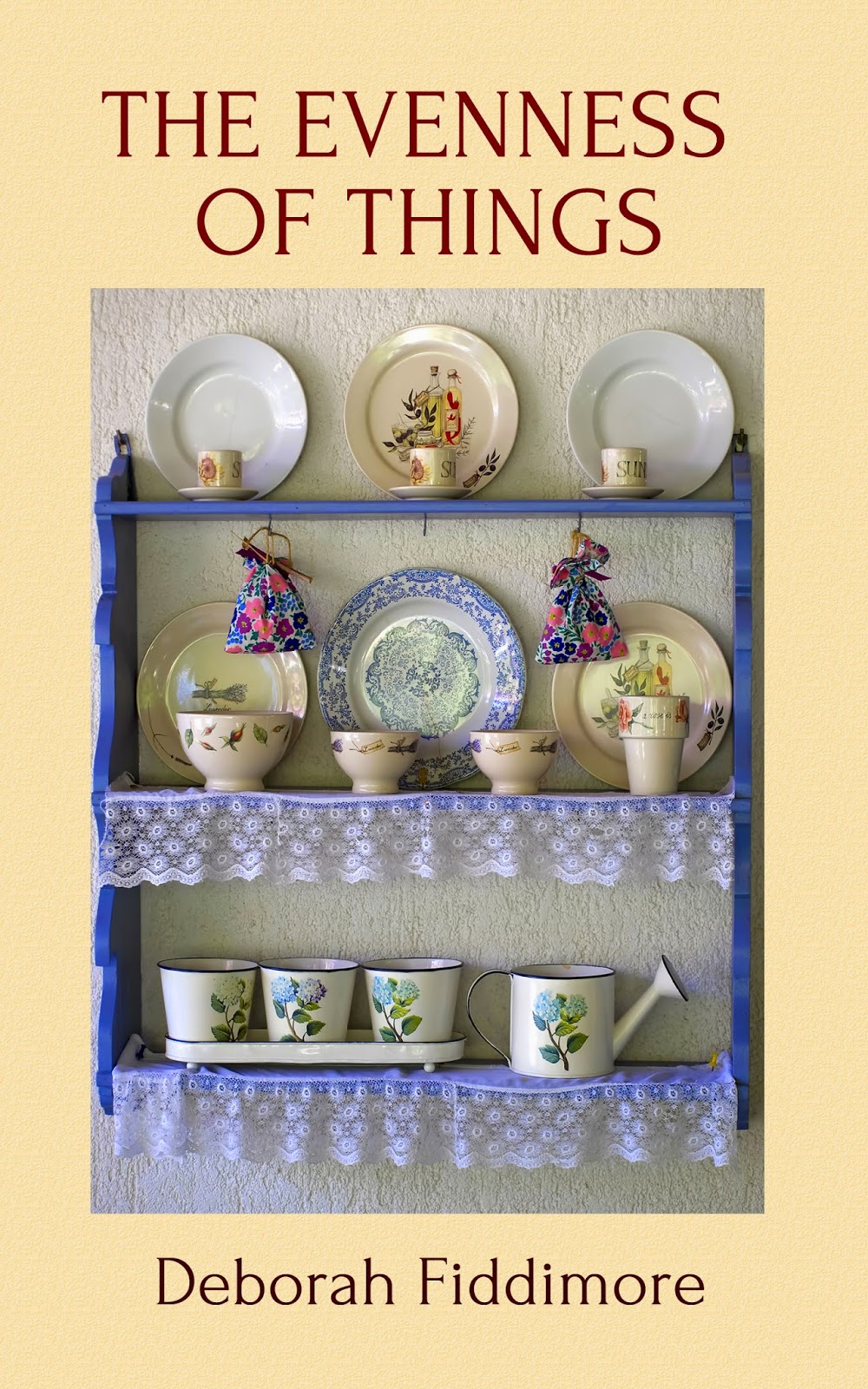
Click on the link to see the novella on amazon A recent reader review: ‘
I have just read this book for the second time, and loved it just as much as the first time. The story is exceptionally well-written, with lovely and sometime humorous turns of phrase and descriptions. The main character, Daisy, falls in love with a house, and the reasons for this gradually unfold as the story progresses. I was moved to tears a couple of times as Daisy’s emotional state will resonate with many of us, especially if we have children or have suffered bereavement. I won’t reveal any more, but suggest you read this for yourself. You will not regret it.’
Deborah Jenkins is a primary school teacher and freelance writer who has written articles, text books, devotional notes and short stories. She writes regularly for the tes. She has also completed a novella, The Evenness of Things, available as an Amazon e-book. She is currently seeking a publisher for her recently finished novel, Braver. Deborah loves hats, trees and small children. After years overseas with her family, who are now grown up, she lives in Sussex with her husband, a Baptist minister, and a cat called Oliver