
As a child, I watched my father take expensive pieces
of quarto drawing paper, fold them threefold and write to-do lists. A few weeks later, he would fold another
piece of quarto and copy most of the tasks from the old list on to the new
one. Even at the tender age I was, I
perceived that the time he spent compiling his lists could have been used more
effectively in working through the tasks on them.
Writers cannot afford to be dreamy and disorganised. They also need somewhere to write down ideas as
they occur. When we’re told that we
should always have our notebooks with us, we nod sagely, whilst thinking to
ourselves, ‘I should buy one’ or ‘I must dig out that notebook I bought ages
ago from my knicker/underpants drawer’ or ‘I wish I had the confidence to get
my notebook out of my handbag when I need to write something down. I mean, people might think I’m a writer or
something!“
 The Bullet Journal was devised by Ryder Carroll, in
his best-selling book The
Bullet Journal Method. The Bullet
Journal is a combination of an appointment diary, to-do list, and repository
for ideas and consists of brief entries (bullets) which can be viewed and
understood at a glance, with every page being numbered and indexed. It is ideal for jotting down ideas for
stories and not instantly losing them – and not as ostentatious as a
traditional writers’ notebook. A typical
Bullet Journal will consist of standard items (such as the Future Log,
Monthly and Weekly Log), and Collections (for projects) but you
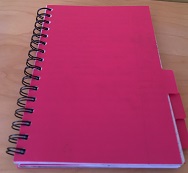
can set up yours to suit you, your writing and other commitments. Mine looks like this:
- Index
- Future Log – events and targets for every month except the
current one - Monthly Log – events and tasks in this month
- Weekly Spread – events and tasks for this week.
- Collections – ideas and planning for projects in connection
with the ACW Jubilee, church and for stories.
Being a writer, I list events and tasks vertically down the
page or rule boxes around them, but more arty journal-ers draw beautiful doodles
and borders.

Bullet Journals are defiantly analogue – handwritten. It is possible to buy an official Bullet
Journal notebook (with
ready-numbered pages) and pens, but
it’s quite acceptable to use any old lined notepad from a cheapo store (as I
have) and numbered one’s own pages. There
are apps for Bullet Journaling, but doing it electronically would take away the
satisfaction of drawing a pencil cross through task/events ‘done’.
Plotting out days and weeks in my Bullet Journal has
so far helped me, not only to remember important dates and tasks, but to
prioritise the important over the everyday and urgent. Write that story can be a pious aim. Allocating time for it on specified few days
in my Bullet Journal will get me writing it.
On the other hand, as we all know, stuff happens and sometimes tasks
don’t get done. Bullet Journal-ers have
a way of dealing with this, without beating themselves up – migrating. With a < or > they move the task on to
another day, week or even the Future Log.
For more information on Bullet Journaling, visit https://bulletjournal.com/ and https://www.goodhousekeeping.com/life/a25940356/what-is-a-bullet-journal/
It would be good to hear from More
Than Writers readers, who are more experienced Bullet Journal-ers than I, in
the Comments below.
Rosemary Johnson has had many short stories published, in print and online, amongst other places, Cafe Lit, Scribble, The Copperfield Review, Fiction on the Web and 101 Words. She has also contributed to Together magazine and Christian Writer. She has also written a historical novel, set in the Solidarity years in Poland. In real life, she is a retired IT lecturer, living in Suffolk with her husband and cat.

