
If you’re a Daily Bread user like me then this month you’ve been reading the story of Joseph. Seven years of plenty, seven years of famine, God revealed to be in charge the whole time. Lovely! We say, several thousand years after the event.
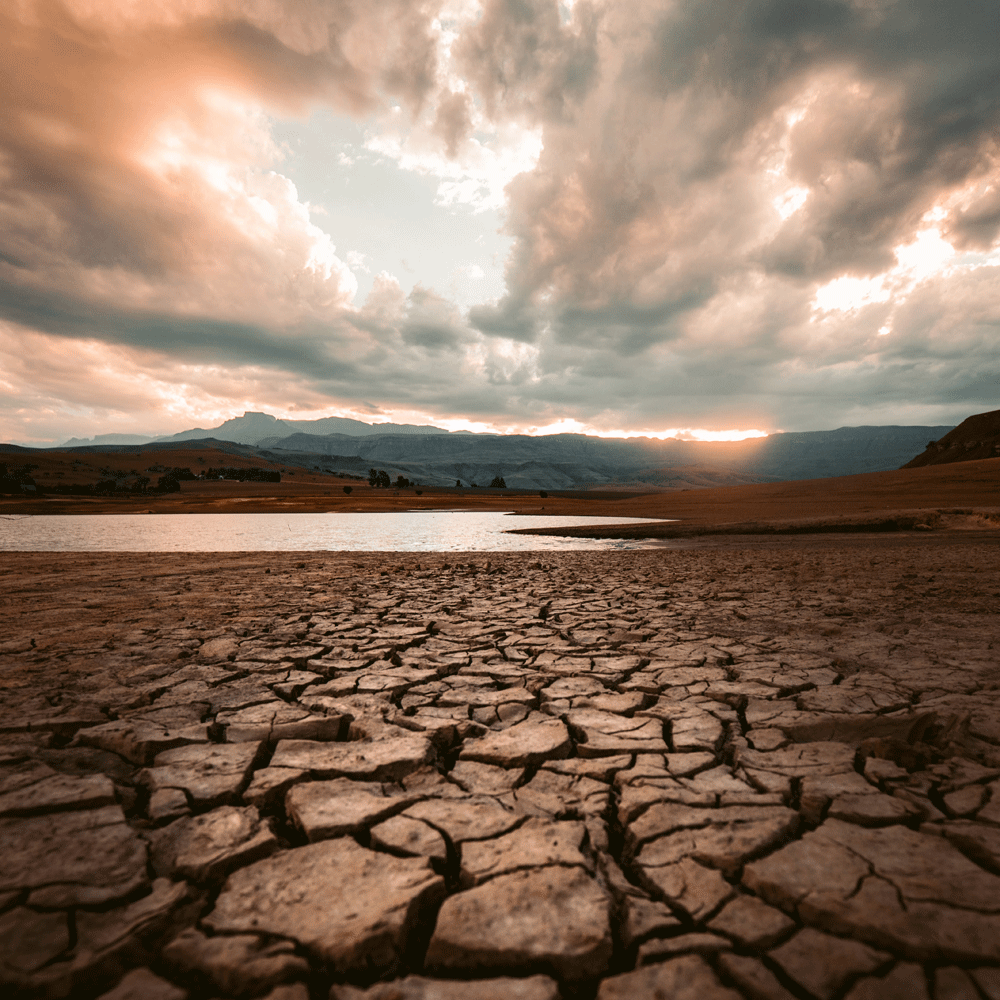
If I was a farmer looking at a dustbowl of sand and withered weeds where my corn field used to be, on the one hand I would be quite relieved to know that there was grain a-plenty; I just had to jump through a couple of extra hoops and my family would be fed. That would be my head knowledge. But in my heart I might still be sick with fear. The unthinkable had happened, once. Why should it not happen again?
God was in charge. God had set things up so that the Egyptians, and through them the people of neighbouring countries, should not starve when famine struck.
Did God actually send the famine? Or did he know it was coming because it was the inevitable working out of a whole host of factors in the way he had set up the world – climatic, meteorological, chemical, social – that, looked at logically, could only end in a famine? The same way that keeping live bats in a meat market could only, logically, inevitably result in a bat virus passing to one human being and – again, due to a combination of factors including pride, stubbornness, fear, politics and stupidity – thence to the rest of the planet …
Yes, I’m writing this on the first day of Lockdown 2 and I’m talking about that flippin’ virus.
I’m not going to get into the whole question of could God have stopped / why doesn’t God stop / did God cause or just allow the pandemic? I shy away from questions that ultimately boil down to “why doesn’t God act like I think he should?” Let’s just agree that it’s here.
It has disrupted life immeasurably.
I wish it wasn’t here.
But, I am so glad it’s here now, rather than 10, 20, 30 years ago …
Seriously. Can you imagine getting through this without the internet, Zoom, mobile phones, online orders, food deliveries …? Oh, we could have done it. We might have just put our heads down and forged ahead. Maybe millions more would suffer and die but the world would have gone on. Earth abides.
Frankly, I’d rather do it this way.
In cheap and easy fiction, things come to a nice resolution. If the pandemic were in such a book, someone would find a cure and normality would return, everything and everyone back in their place. It seems to me that God doesn’t do that. He gives us the tools to get through stuff rather than to resolve stuff – thereby opening up whole new possibilities for proceeding. That’s reality.
So, how do we write fiction that reflects reality but still has a resolution?
I would say, sure, have a resolution but it can’t tie everything up. If everything is back to normal then what exactly was the point of reading your novel? To use modern parlance, your book needs to end with a new normal – life going on but in a new way, so that people will want to know more.
Then, of course, you write the sequel. After all, that’s what God did in Exodus …

Ben Jeapes took up writing in the mistaken belief that it would be easier than a real job (it isn’t). Hence, as well as being the author of 5 novels and co-author of many more, he has also been a journal editor, book publisher, and technical writer. www.benjeapes.com

