
I like alliteration given this post and the last one, Creating Characters, start with C! Must remember to explore other letters. Q could be tricky but moving on…
Dialogue – do you like writing it for your characters or dread it?
I love writing dialogue for longer short stories. I say longer but compared to flash fiction, anything over 1000 words is long! I do use dialogue in my flash work but not as much obviously. In flash, I focus on one or two characters at most. Where I only have one, I use thoughts rather than make the character talk to themselves. To me, that seems more natural.
 |
| Do your characters like to talk? Pixabay |
The problem I have when writing dialogue at all is to resist the temptation to have a good old game of conversational ping-pong between characters. You, as the writer, are having a high old time of it inventing all this wonderful talk. You are sure a reader will enjoy it as much as you currently are. Er… to quote Gershwin, “it ain’t necessarily so”! (I have been here so many times!).
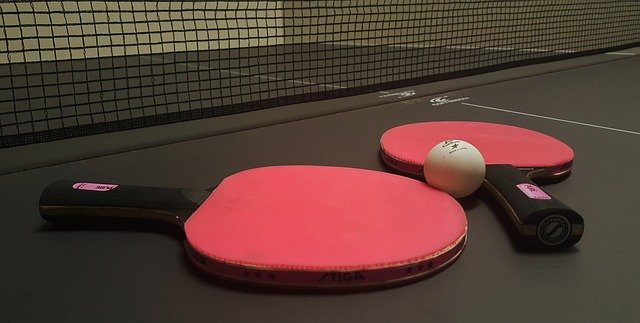 |
| Conversational ping-pong can be great fun but can overload your story. Pixabay. |
It pays to take a hard look at your gorgeous dialogue when editing. Is it all necessary? Be honest! Does this conversation reveal something important or show something about the character? If it doesn’t, then it should come out.
 |
| Socially distanced dialogue! Pixabay image. |
A story top-heavy in dialogue will switch readers off. Occasionally I will read pieces which are entirely dialogue based. I’ve come across the odd competition set on this basis. It is no coincidence though these pieces are always on the short side. Readers usually need the “bits in between” to get their bearings as to what is happening in the story and to see if they can guess what is to come.
The other danger is where exposition creeps in and characters tell each other what they must know already for the story to make sense. It’s a not-at-all subtle way of conveying information. Dialogue must seem real to convince readers.
 |
| Plenty of dialogue in here I would have thought. Pixabay |
So you need other ways of conveying information. If it is crucial to know Character A has an obsession with red hats, you could get Character B to give A yet another red hat with a comment to show us this rather than have Character A tell us about their craze.
 |
| Dialogue should serve a purpose and move the story on. There should be good links. Pixabay. |
It’s a question of enjoying getting your characters to talk but ensuring they shut up pronto when nothing useful would be served by their nattering! There is a lesson for us all there I think! And now I will shut up… until next month!

