
Today,
I’m talking about one of my very favourite novelists and people, Anthony
Trollope.
I’m talking about one of my very favourite novelists and people, Anthony
Trollope.
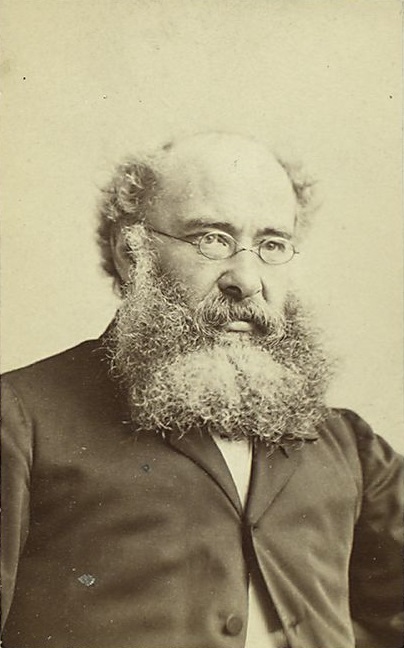
Trollope’s back story is fascinating. His
father was a solicitor, a man who was probably addicted to opium, via the huge
doses of calomel so beloved by Victorian physicians and who had absolutely no
business sense. Due to a run of catastrophic decisions and ill-fortune, the
family found itself very short of cash and with a bleak future staring them in
the face. His mother, Fanny, took up her pen to support her large family while
dealing with the death of several of her children. Before the causes of
tuberculosis were known, families would have to stand by, helpless, and watch
the disease snatch away many of their family. This is what happened to the
Trollopes. Of the seven children, five died young.
Trollope was educated at Harrow, pitied
and despised by his school mates and masters as he was not paying any fees. He
was wretchedly unhappy, but did his best and on leaving school, secured a
position at the Post Office which was to be his salvation and inspiration for
most of his life.
and despised by his school mates and masters as he was not paying any fees. He
was wretchedly unhappy, but did his best and on leaving school, secured a
position at the Post Office which was to be his salvation and inspiration for
most of his life.
Fairly early on in his career, Trollope
was sent off on the first of what were to be many peregrinations around Britain
and Ireland on behalf of the Post Office. And so began Trollope’s dual career
as hard-working civil servant and best-selling novelist.
was sent off on the first of what were to be many peregrinations around Britain
and Ireland on behalf of the Post Office. And so began Trollope’s dual career
as hard-working civil servant and best-selling novelist.
Trollope had a portable wooden writing
desk made which he took with him on his travels. It sat comfortably on
his lap (the world’s first laptop, perhaps?) and he wrote while he travelled on trains and coaches all over
the kingdom. When he was at home, he got up early every day and wrote 3000
words before work. To me, as what you might call a jobbing writer, this sounds
admirable. However, many of his contemporaries were scathing and snobbish about
his work ethic.
Writers were supposed to wait for the muse
to descend, not follow a schedule. Trollope was very open about the
fact that he wrote for money which caused much head-shaking amongst his
critics.
to descend, not follow a schedule. Trollope was very open about the
fact that he wrote for money which caused much head-shaking amongst his
critics.
He worked prodigiously hard on both of his careers, and rather
than waiting for inspiration to strike, he wrote by the yard. He married and
had two sons, living a comfortable life with no sudden deaths, impecunious
stupidity or affairs. In sharp contrast to his contemporary Dickens, who
married young and made his wife pregnant almost constantly (she had twelve
pregnancies in all, two ending in miscarriage) before leaving her for an
actress, Trollope was uxorious and loyal. He had every reason to go off the
rails with his difficult childhood and youth, or at least to succumb to the odd
bout of self-pity, but as far as we can tell, he rarely did.
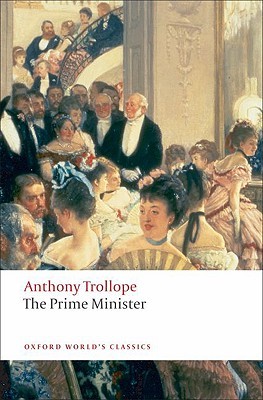
Trollope was a very compassionate and
sympathetic drawer of character. He is the only Victorian novelist to mention
male prostitutes, in “The Prime Minister” and his fallen women are
personalities in their own right, battling against the unfair hand life deals
them and doing their best to make it through life. Almost alone amongst
Victorian novelists, he mentions the men who were complicit in their downfall,
in a startlingly modern way.
What I really love about him, thought, is
his honesty. He never pretends that he is anything other than a highly
disciplined worker. No draughty garrets, no gazing into the middle distance waiting
for the muse to strike. He paid an elderly servant £5 a year to bring him
coffee at 5.30 am every day and wrote for three hours, then went off to the
office to do a full day’s work.
My all-time favourite story about him is
one he tells himself in his Autobiography. It concerns the frightful Mrs
Proudie, wife to the cowering Bishop, who appears in five out of the six of the
Chronicles of Barsetshire. Like many fiction writers (and I can now count
myself in that group), he had created her, developed her character and become
very attached to her. One morning, he was sitting at his club writing, “The Last
Chronicle of Barset” when he overheard two clergymen talking about his books. “If
I could not invent new characters, I would not write novels at all,” said one
of them. The conversation moved on to Mrs Proudie, with the two men badmouthing her and her creator. Picture yourself sitting listening to your readers critiquing
your novels and your characters. Here’s what Trollope did:
“It was impossible for me not to hear
their words, and almost impossible to hear them and be quiet. I got up, and
standing between them, I acknowledged myself to be the culprit. ‘As to Mrs
Proudie,’ I said, ‘I will go home and kill her before the week is over.’ And so,
I did. I have sometimes regretted the deed, so great was my delight in writing
about Mrs Proudie, so thorough was my knowledge of all the little shades of her
character..”
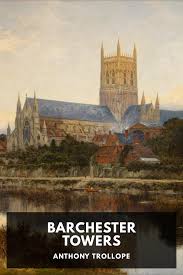
I love Trollope’s writing. It’s clever,
compassionate, subtle and funny. Although he died nearly 140 years ago, his
books still come up as fresh as paint. As I consider whether to kill another of
my characters, and become ever more fond of my own snobbish know-it-all,
Isabella M Smugge, if I can write even a quarter as well as Anthony Trollope
did, I’ll be satisfied.
Ruth is a freelance writer and novelist.
She is married with three children, one husband, four budgies, six quail, eight
chickens and a kitten. Her first novel, “The Diary of Isabella M Smugge”, published
by Instant Apostle, comes out in March 2021. She writes for a number of small
businesses and charities and blogs at Big Words and Made Up Stories. Ruth is a
recovering over-achiever who is now able to do the school run in her onesie
most days. She has abnormally narrow sinuses and a morbid fear of raw tomatoes,
but has decided not to let this get in the way of a meaningful life.
Originally written by Ruth Leigh

