
I consider it serendipitous that the day before the publication of this post, 2nd September, was the “Feast Day” of JRR Tolkien, who died on 2nd September 1973.
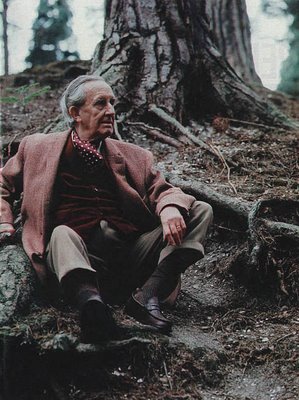
As I was wondering what to write for this post, I listened to Lectio 365, an app of daily reflections which I can recommend to you, and it was all about JRR Tolkien, who is one of my most-loved authors.
Why do I love him and his work so much?
I think it may come down to the power of one small being to change the moral and spiritual landscape of the world: this is Frodo in ‘The Lord of the Rings‘. And Tolkien’s vision of that moral landscape was panoramic. I feel the human condition is laid out for us in his myth-making, with the image of the One Ring of power, forged by the Dark Lord, Sauron. All who crave this ring, and become bound by it, will fall into ruin.
Of the races of Middle-earth (the Elves, the Hobbits, the Orcs, the Dwarves, and several others), Tolkien identifies the race of men in these terms, writing of the hero, Isildur: ‘He had this one chance to destroy evil forever… but the hearts of men are weak, and they crave power above all…’
The settings are vivid and compelling. The idyllic Shire, a vision of idealised pre-industrial innocence, is the land of the hobbits; Mordor, a dreadful, degraded and chilling environment, the realm of the Dark Lord.
And thus the story continues; and the scene is set for the dereliction and waste which one small being, Frodo the hobbit, takes it upon himself to reverse.
As Frodo says to the wizard Gandalf, “I wish it need not have happened in my time.”
And Gandalf replies, “So do I, and so do all who live to see such times. But that is not for them to decide; all we have to do is decide what to do with the time that is given us.”
An expert in Anglo Saxon mythology, JRR Tolkien was and is regarded as ‘the father of the modern fantasy genre of literature.”
He led CS Lewis to God, and CS Lewis moved from atheism to being one of the greatest of all Christian apologists. Not long ago I found a Twitter challenge: what is the book you most wish you had read when you were young? My answer was ‘Mere Christianity‘ by CS Lewis. (In fact I read it in my late 30s). I believe it would have made a huge difference to my subsequent path through life (always assuming I had fully taken on board what it said, of course, at that age).
Back to JRR Tolkien. His Christian worldview, it is said, ‘continues to shape the literary landscape.’ He was a great example of the high calling of ‘myth-making’. On Lectio 365 I noted this observation: ‘Only by myth-making and by becoming sub-creators can we aspire to the state of creation before the Fall. The ultimate example of the power of such story telling is Jesus.’
On one occasion, we are told by the gospel writer Matthew, all Jesus did that day was tell stories.
When we tell a story to entertain a child, or persist through the writing of a novel, or understand a film in a new way, we are part of this creative work. All myth-making, we learn, no matter how shaky and filled with errors, is working its way to God’s truth.
Lectio 365 for Tolkien’s Feast Day ended with a prayer: ‘You are writing a story of great adventure with my little life. I am trusting You as the author of my unfolding story, and the perfector of my imperfect faith, to bring me home eventually to The Shire with a song to sing and a tale to tell.’

