
I started NaNoWriMo!
A mistake as it turned out – by the end of day three all I had achieved was a very brief prologue and a first chapter I shall never use, plus a real muddle over the word count. It seems as if, this year, some maths needs to be done before recording the amount of words. Unfortunately, this has resulted in me somehow doubling my extra amount on day two then failing to catch up to reach the inaccurate total on day three. On day four I was too busy to find writing time, day five I was tired and feeling under the weather and then it … fizzled.
I am not a novice at Nano. On the side of my fridge I have certificates spanning many years, gradually curling up with age. So what’s different? Can I blame my muse for not turning up? Or the pressures which I’ve experienced lately? It may simply be due to virtually no preparation – the lack of preparation is because I couldn’t make myself do it. Why? Am I simply not ready?
Some writers can work on novels one after the other. Their imaginations fire as they pour the words onto the page. Others are slow burners, developing and working with an idea in a consistent and steadfast manner. But I am neither of those – I am a writer who collapses and needs to go into recovery after every book. It has happened enough times for me to know that I shall be able to revive my imagination, make some preparations and the words will begin to flow, probably once Christmas is over, or maybe Easter.
Meanwhile, I am organising book events and, with some difficulty, have written a small devotional piece for a village magazine. I’ve also put together, and sent, a proposal for a non-fiction book. The latter was a struggle and I’m feeling quite uptight about it but then that’s not surprising – the subject is relaxation! Why does that happen? Is it a spiritual battle?
I used to write an agony aunt column for Caring Magazine, taking a problem sent in about a looked-after child and giving advice to the carers. My own daughter would invariably present me with some pretty challenging parenting when I was working on this, even if she didn’t know. On a larger scale, this ‘opposite phenomenon’ can be seen in the teacher whose child is refusing to learn, the policewoman’s son who commits crimes or the evangelist’s offspring who becomes an aggressive atheist.
So often opposition arises when we are trying to get things right and spread the word against the realities of obstacles in our own lives. Yet because conflict happen is the very reason why such challenges are so essential in novels, everyone understands struggles and readers relate to them. In the best stories conflicts may be larger than in life, yet totally believable.
Writing this blog is challenging me to take time to find a large piece of paper and write down as many conflicts and difficulties as I can think of that my protagonist could face in my next novel, including contrary characters with complicated lives and troublesome ideas.
This is beginning to look a lot like preparation. I need to move forward and remember a verse that has helped me many before:
‘And the God of all grace, who called you to his eternal glory in Christ, after you have suffered a little while, will himself restore you and make you strong, firm and steadfast’ (1 Peter 5:10)
I will hang on to that knowledge and maybe I shall be back to novel-writing sooner than I think.
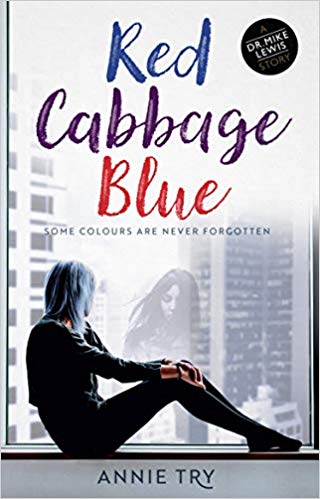
Annie Try is the pen-name of Angela Hobday, Chair of the Association of Christian Writers. She is co-author of four books on creative therapy and has written four novels. Her latest novel, published by Instant Apostle in September 2019, is the third Dr Mike Lewis story.
Originally written by Wendy H. Jones

