
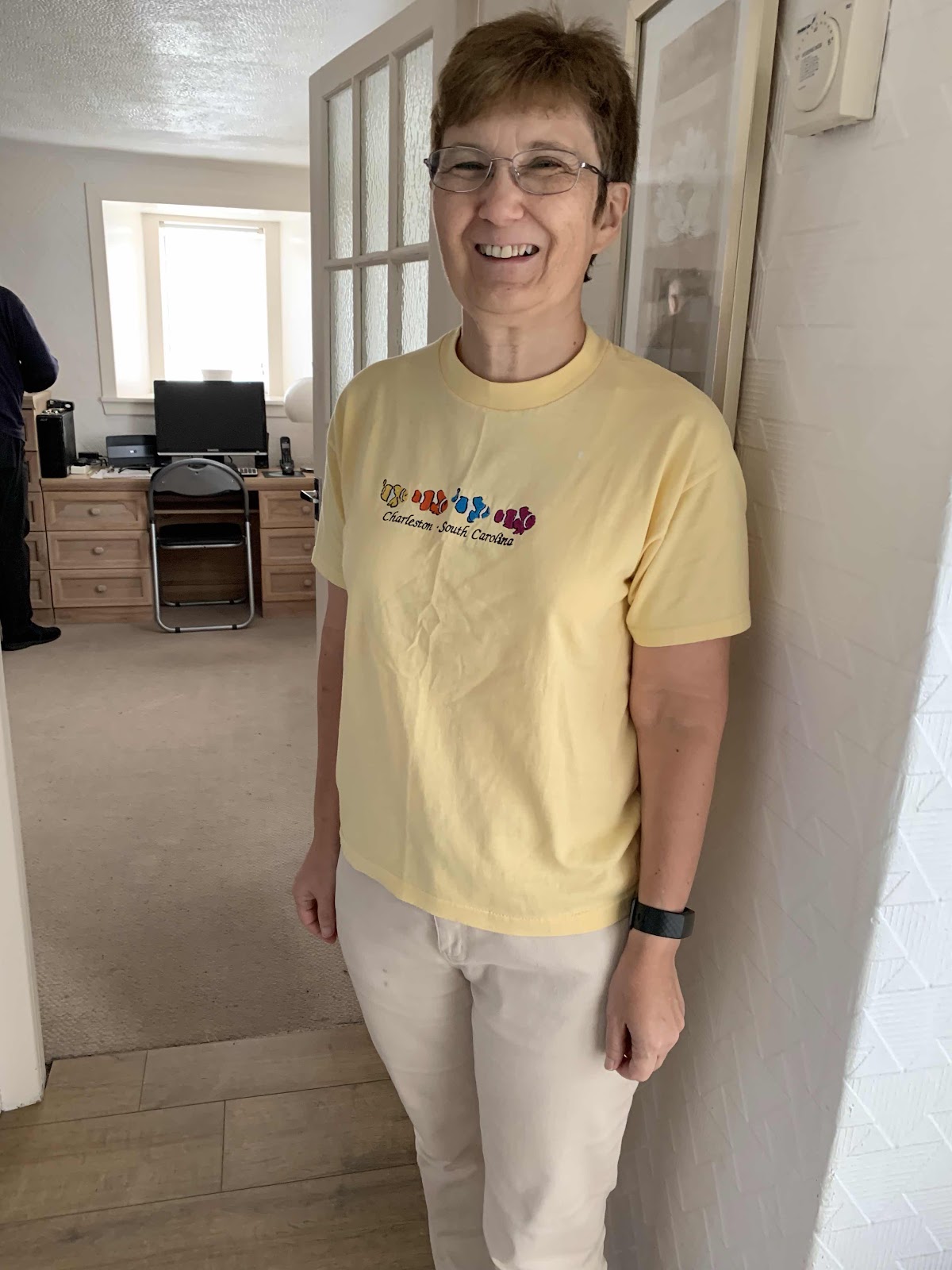
It’s not often I post a photo of myself in a blog. Especially not one about writing. However, it does tie in with my topic today. As I write this, it is Microcephaly Awareness Day and people around the world are being asked to wear yellow in support. My friends’ daughter has microcephaly, so I stepped up to the plate and rocked yellow. However, this did get me thinking about the books I not only read, but write. How diverse is our, or indeed my, writing when it comes to including characters with disabilities?
In my case, in my Fergus and Flora Mysteries, Flora’s sister has Down Syndrome and Fergus has severe asthma. This was never a deliberate effort to include disabled characters, rather the characters wrote themselves. It seemed natural and the characters are all the better for this. In fact, Bella, the girls with Down Syndrome, is crucial when it comes to solving the mysteries. In my Cass Claymore Investigates series, Quill, one of the main characters, has dwarfism. This idea came to me and I went with it, seeing where it would lead. His character is larger than life and it gives me the ability to ensure this, rather than his dwarfism, shines through. He’s turned out to be a fabulous character and all the ladies love him.
What of other examples from literature. The most well known must be The Curious Incident of the Dog in the Nighttime by Mark Haddon, where the main character has autism. Jeffery Deaver’s detective, Lincoln Rhyme, is quadriplegic. Cozy mystery writer, Libby Kline has a main character who has coeliac disease. ACW Chair, Annie Try, in her book, Losing Face, has a character who is severely disfigured. I believe these books all have a richness and a depth to them which lifts the characters off the pages. It allows the writer to stretch his or her self and the reader to think more deeply. It also demonstrates an awareness of, and willingness to be diverse in our thinking. To reflect the real world. However, and this is key, it is important to do it sensitively and with some knowledge of the condition involved. Also, make them a key part of the story, not just added in to tick a box. Make them real.
God made us all different. He made us unique. He used a huge palette to draw us and my challenge to you is to think about ways in which your books can be more inclusive. Is there a character with a disability who would bring added depth to your novel? Challenge yourself to think about this and if you already have characters with disabilities in your books, tell us about them in the comments. What are your thoughts? Comment below and join in the discussion.
About the Author
Wendy H. Jones is the award winning author of the DI Shona McKenzie Mysteries, Cass Claymore Investigates, The Fergus and Flora Mysteries and the Bertie the Buffalo Picture Books. She is also President of the Scottish Association of Writers and the Webmaster for ACW.
Originally written by Wendy H. Jones

