
The craft of writing, as we all know, can be both taught and learned. I have read many books about writing, I have had many conversations about writing, I have listened to many talks about what makes a good writer. But where and how did I first learn to write? How did you first learn to write? I’m asking because, as a supply teacher, moving around different schools and sometimes staying to do longer term cover, I am fascinated (and sometimes appalled) at the way in which I am required to teach writing. And, believe me, I really do mean ‘required’. Some schools have loose approaches and some schools have tight approaches and, boy, if you deviate from the tight approach, one tiny iota, you’re out of there.
The best system I have ever used was at a school in London, teaching writing through a programme called the Power of Reading. Basically you work from good quality children’s books – Varjak Paw by S.F.Said, Coraline by Neil Gaiman, The Miraculous Journey of Edward Tulane by Kate Dicamillo – and you basically live, eat and breathe the world of each book with your class. You act out scenes together, hot-seat and interview characters, do art work, create music, model grammar, punctuation and vocabulary from the book. You immerse your classroom and your children in this other world so that you catch them making up stories about the characters at playtime, and talking about what might happen next. You write high quality models for the interactive whiteboard demonstrating the kind of writing you want from them – a letter from Edward to Abilene/ a diary entry by Varjak Paw – you analyse it together and then you get them to write. It’s wonderful.
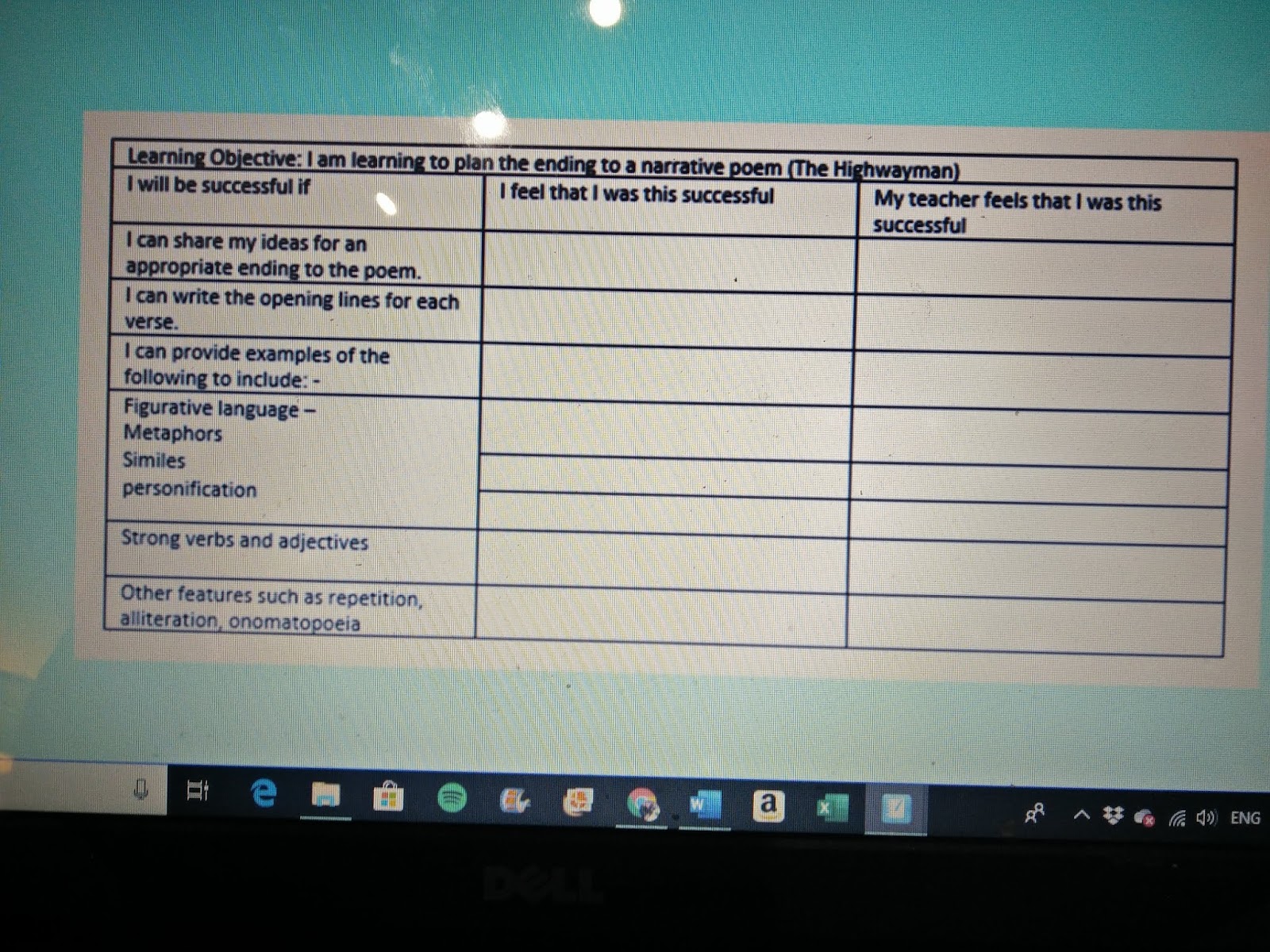
At another school they used a version of a writing programme based on a system of writing models by Pie Corbett. In this school tt was used in a very structured way and we had to follow the method absolutely. Lesson 1 – Awe and Wonder. For The Highwayman, we had things like ketchup spattered lace hankies, a plastic musket and bags of gold coins lying around. Crime scene tape and a CSI investigation kicked off. Lesson 2 – annotating a high quality model and looking at features of the genre. Lesson 3 – Collecting words and phrases for our own writing. Lesson 4 – filling in a plan for our writing. Lessons 5 and 6 – first draf, Lesson 7 – editing and improving. Lesson 8 – ‘publishing’ – copying out all over again in our best handwriting. Then the cycle starts all over again but this time with the children doing every stage independently for their independent writing books which are not marked or commented on by teacher and therefore able to be assessed on their own merit entirely. The Awe and Wonder lessons were great fun, but it ran the risk of being very dry after that.
These lessons were accompanied by detailed learning objectives and success criteria which the children self marked, with ticks (1 to 3) to show how well they felt they had met them. (Modal verb – check, subordinate clause – check, fronted adverbial – check). The teacher then marked another column with ticks to see if she/he agreed.
When I started working there, I hated it. I thought it was a dreadful way of teaching writing. There were no texts, just snippets, short A4 ‘green models’ which did not really allow the children time to be pulled into the worlds they created. There was so much writing and copying out that the low ability writers were turned off and even the middle ability writers struggled. For success on analysis rather than imagination. It was soulless.
But do you know what? It worked. It was so systematic, it got most of the children to the expected standard. You could argue that the ones it didn’t succeed with are the ones who would not have succeeded anyway. I hated it though. Whether it will give those children a life-long love of writing, whether it will draw them into the world of books and help them dream big dreams, I don’t know. I suppose it depends on your ideas about why we teach writing in the first place.
I have been teaching for 35 years this year and I am still learning. Should I take all the things I’ve learned about teaching children to write and write my own ‘programme’? The thing is, I’m not sure that it’s programmes that help children to write as much as passion. I can tell you, I had little passion when teaching the mechanical programme I describe above.
How did you first learn to write?
Click on the link to see the novella on amazon
You can read my educational articles here: –
Deborah Jenkins is a freelance writer and teacher, who has written articles, text books, devotional notes and short stories. She also writes regularly for the tes. She has completed a novella, The Evenness of Things, available as an Amazon e-book and is currently working on a full length novel. Deborah loves hats, trees and small children. After years overseas with her family, who are now grown up, she lives in East Sussex with her husband, a Baptist minister, and a cat called Oliver.

