

A while ago, I was telling a friend that I belong to a national writers’ group called the ACW. She asked what that stands for and I said it was the Association of Christian Writers.
“Wow, what’s that?” she said, “I mean. how is that different to any other writers’ group?”
“Well, we’re all Christians,” I explained.
She nodded. “So…you all write about Christian stuff?”
“Oh no!” I replied, “We write about all kinds of things. It’s just that all the people in the group are committed Christians.”
She nodded but this time more doubtfully. “How does that make you different to any other writers’ group?” she asked, again. I waffled along for a while about having similar values and a common world view and used various other phrases that you would perfectly understand. But she obviously didn’t.
It got me thinking. How are we different? What’s our distinctive? In principle, are we like any other group of people who have both work and faith in common? How would a group of Christian plumbers or builders or teachers be different to their non-Christian colleagues? Would they stand out as being different? Indeed, should they?
Let’s use plumbers, as they are currently close to my heart for a number of reasons. If I used a Christian plumber, what kinds of expectations would I have of him/her? Well, I think I would assume the person would be honest, hard-working and care about providing the best possible service. I would hope he or she would be positive and respectful, keep his/her word and show integrity. Of course, we’re all human, so if this didn’t happen 100% of the time, I wouldn’t throw a pink fit. But if it were generally the case, I’d be happy.
I wonder what non-Christians would expect from Christian writers. If my friend is anything to go by, not every much! What would other Christians expect. Similar things? That we’d be honest – doing our research properly etc – hard working, care about producing the best possible writing. At author events and when interacting with others, to be positive and respectful, show integrity.
In some ways it’s harder for us because our currency is in words and human beings use these all the time, not only when writing books. We use them when writing emails, posting on social media, taking part in discussions on Facebook or Twitter. We use them when making a complaint or making our political views known on on-line platforms. Should we hold ourselves to such exacting standards there too? Of course, whether we write for publication or enjoyment, each word is chewed over, analysed, cracked open. When we speak, email, post our thoughts, should we be as careful?
I’m scaring myself now. This seems such a lot to live up to. But if not, then I’m genuinely interested to know – what in your opinion is our distinctive? And how would you explain it to my friend?
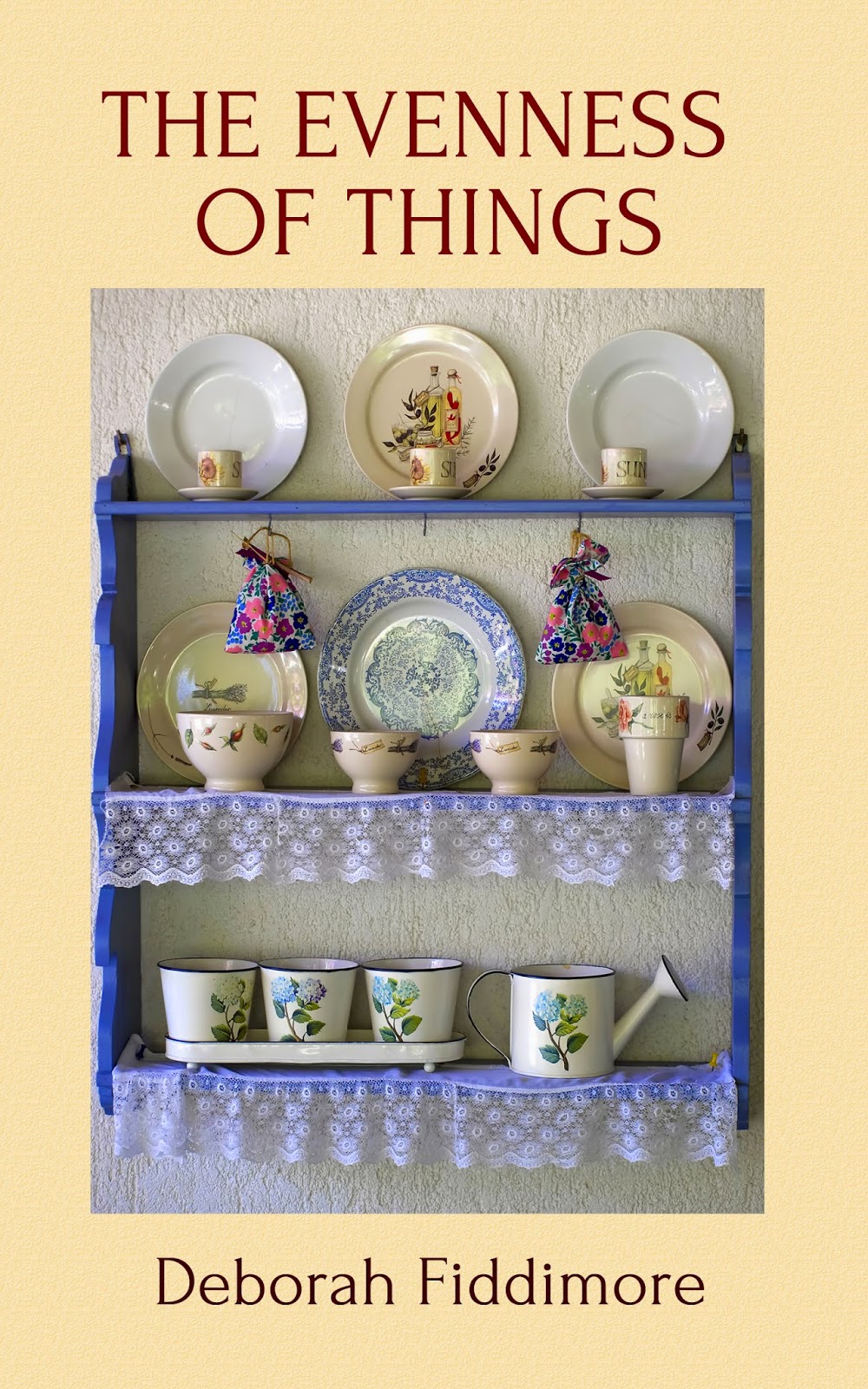
Click on the link to see the novella on amazon
Deborah Jenkins is a freelance writer and school teacher, who has written articles, text books, devotional notes and short stories. She also writes regularly for the TES. She has completed a novella, The Evenness of Things, available as an Amazon e-book and is currently working on a full length novel. Deborah loves hats, trees and small children. After years overseas with her family, who are now grown up, she lives in East Sussex with her husband, a Baptist minister, and a cat called Oliver.

