
Contrary
to popular belief, supercalifragilisticexpialidocious
is not the longest word in the English language. This new-found knowledge ruined my children’s
week when I told them; it’s going to take them some time to master its
replacement, which, in case you were wondering, is pneumonoultramicroscopicsilicovolcanoconiosis, – a lung disease
contracted from the inhalation of fine silica particles from a volcano.
SWIMS
still says SWIMS when you look at it upside down (try not to crick your neck as
you contort to see if this is true).
still says SWIMS when you look at it upside down (try not to crick your neck as
you contort to see if this is true).
Around
1000 new words are added to the dictionary every year (my excuse for being so
out of touch with the language of the ‘yoof’ I teach).
1000 new words are added to the dictionary every year (my excuse for being so
out of touch with the language of the ‘yoof’ I teach).
These
little gems (and I know, I’m safe, amongst fellow word-admirers, to reveal my
inner geek and call them that) made themselves known to me as I gathered some
thoughts for a sermon I preached last week, about the power of words (should you wish to spend a further 16 minutes dwelling on the topic, my sermon can be found here). I wrote, last month, under the same title, and,
as I gathered the material for the sermon, I decided there was another blog in
there somewhere. I fear, in fact, that
there is so much worthy material under that title, that I will be turning blogs
into sermons and back into blogs and then more sermons, riding an infinite
topic-loop for some time to come.
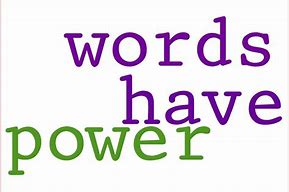
I’m
sure you will indulge me and agree that it’s a topic worth dwelling on. Words are our everyday currency and we can’t
get enough of them. They fill awkward
silences and keep us entertained. We
read and listen to them, record ideas and create with them. The lonely and alone crave them. On long, wet cooped-up-with-the-family
afternoons, we long to escape them! They
build up, calm and comfort, explain, analyse, solve. They can sting and wound, used thoughtlessly
and destructively; their absence, when they should have been said, can hurt
too.
My
children love looking back over a notebook I used to keep of funny things they
said when they were little. My oldest
son’s favourite is one from an occasion when we were heading out for the
afternoon to visit a friend, who had just had a baby called William; he asked,
in his sincere not-quite-two-year-old squeaky voice, if we were going to see
‘Willy Babyam.’ ‘Fire mixtinguisher’ was
another cute mispronunciation we didn’t correct for a long time. Whilst they
enjoy entertaining themselves with comedic highlights of their younger lives,
I’m glad that some of the silly and downright unpleasant things I have said at
times, haven’t ended up on the pages of a notebook – I’m sure I’m not alone in
that.
As I
undertook a spot of Googling on the topic (as all good sermon-writers do!) I
uncovered a questionable piece of research, which concluded that an average
person speaks 860.3 million words in their lifetime, the equivalent to
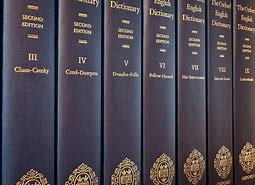
narrating the Oxford English Dictionary 14.5 times (don’t some of us feel that our
children achieve this before lunch, some days?!). This raises all sorts of questions, caveats
and variables depending on character, of course – but imagine for a moment that
it even partly reflects reality. That is
a lot of words.
A
thought-provoking article on the Crosswalk website raises a challenging point: “We
could fill a library in a lifetime – if we did, what would the titles of these
books be?” How are we using our words – to gossip, slander, moan, complain,
berate, tear down? Or to build up,
encourage, support, illuminate, and ultimately point people to Jesus, the Word
above all words, who can forgive, set free and break the chains of other words
that might have been spoken over us?
As
writers, too, we have such a privilege and responsibility. We may not write as many words as we speak,
but, in writing them down, they have a permanence, weight and lasting impact that
our spoken ones lack. “Out of the
overflow of the heart,” says a verse in Matthew’s gospel, “the mouth speaks.”
We could replace those last three words with, “the pen writes.” Let’s challenge ourselves, today, to stay so
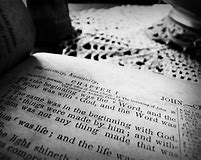
connected to the Word who was there in the beginning (John 1v1), that all of
our words, spoken and written, flow from our connection with Him and are, as
far as possible in our human frailty, “sweet to the soul and healing to the
bones,” (Proverbs 16v24) for all who hear or read them.
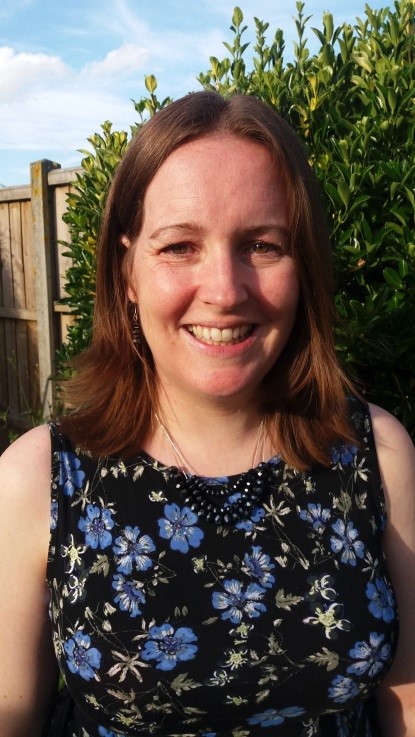
Georgina Tennant is a
secondary school English teacher in a Norfolk Comprehensive. She is
married, with two sons, aged 10 and 7 who keep her exceptionally busy. She writes for the ACW ‘Christian Writer’ magazine
occasionally, and is a contributor to the ACW-Published ‘New Life: Reflections
for Lent,’ and ‘Merry Christmas, Everyone: A festive feast of stories, poems
and reflections.’ She writes the ‘Thought for the Week’ for the local newspaper
from time to time and also muses about life and loss on her blog: www.somepoemsbygeorgie.blogspot.co.uk
Originally written by Georgie Tennant

