
Last night I went to the Reading Group at my local library, clutching the book I’d read over the previous month, the name and author of which I shan’t reveal, because almost everyone at the group hated it. I personally enjoyed it, not because it was great literature, which it wasn’t, but because it was a cracking romp, with believable settings even though the characters were somewhat less fully explored. At the end was an author’s note explaining how she had discovered many of the incidents in the novel, which were based on true stories, and how she had researched the field and period. Which brings me to my topic for today: research.
It may just be me, but it seems to me that every author these days is expected to do detailed research for her work, not just if it is historical fiction or non-fiction, but for almost anything she writes. A historical error will have readers rising from their armchairs in rebellion, and slating what may in other ways be a good book.
 I really don’t get this research thing. Jane Austen never did research: she wrote about what she knew, which used to be the advice given to all writers. George Eliot did research, into Jewish culture and history, but it resulted in her weakest novel, Daniel Deronda. And knowing that the author of my book club book had carefully researched her setting and based many of the episodes on history, did not enhance my enjoyment of the book at all – it just made me think less of the author, who had clearly not had enough imagination to make up stories of her own.
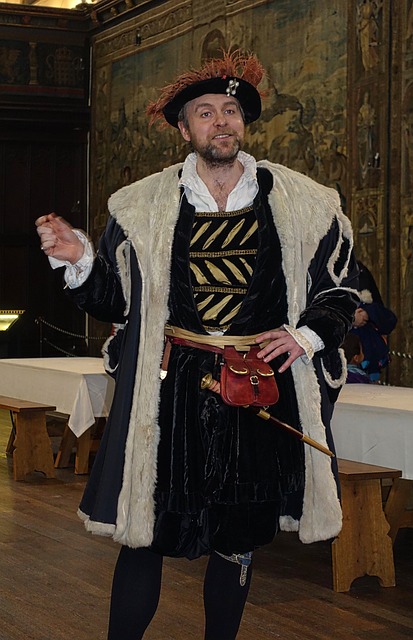 Do you, fellow Christian writer, do research for your work? I can understand the need if you are writing historical fiction – Hilary Mantel clearly did a lot of research into the Tudor period to write Wolf Hall and its sequel. But strangely enough, their most compelling aspect is not any careful evocation of the Tudor domestic or political scene, but the workings of Thomas Cromwell’s mind, which are clearly invented and could not be found in any archives.
As I suggested last month, a good novel is a great deal more than its plot and setting – and beware above of all of trying to write a novel with a message, even if it’s cunningly concealed in a different time and place. You may say that C S Lewis’ Narnia series have a ‘message’ about salvation, but he never lets it dominate the story; I read The Lion, the Witch and the Wardrobe as an agnostic child, and had no clue there were any Christian themes in it!
I hope you will forgive me, as a non-fiction writer (but a great reader of fiction) for giving advice to those who practice the noble art of storytelling, I just think ‘research’ is highly overrated as a part of the writer’s process. And if your heart sinks at the idea of digging into 15th century or even 1950s history, there is always a solution: write fantasy or sci-fi. In other words, make it up!
 Veronica Zundel is a freelance writer whose latest book is Everything
I know about God, I’ve learned from being a parent (BRF 2013). She also
writes a column for Woman Alive magazine, and Bible notes for BRF’s New
Daylight. Veronica used to belong to what was, before it closed, the
only non-conservative, English
speaking Mennonite church in the UK, and is currently playing at being a
high Anglican. She also blogs (rather occasionally!) at
reversedstandard.com

