
 |
| Death of a princess – eclipsed by a precious letter |
I remember the August
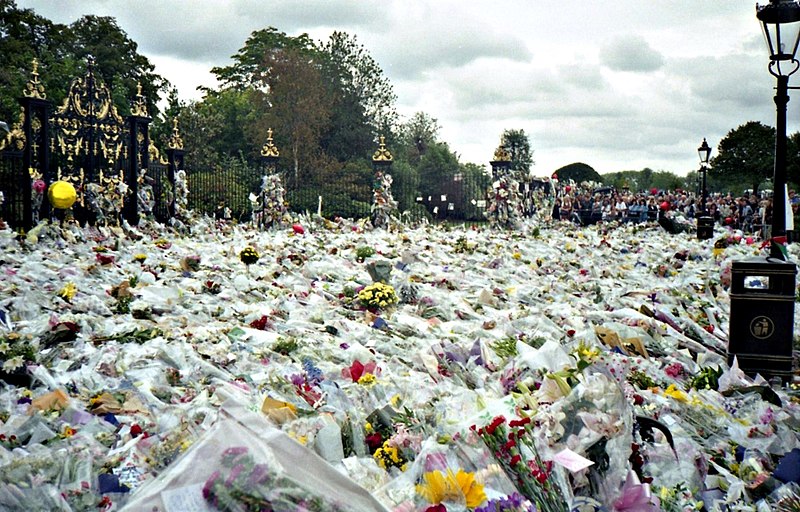
Bank Holiday weekend of 1997 for two reasons: firstly, Princess Diana
died. Secondly, that was the weekend
when I got the most important letter I had ever received. My birth mother had written to me. This was our first contact since she gave me
up for adoption when I was six weeks old (I was now thirty-five).
birth mum. A month later, we met.
As an adoptee I have always been able to celebrate the ‘romantic’ side
of adoption: it appeals to the writer in me.
Unsurprisingly, some of my favourite literary characters are orphans
and/or adoptees: Sara Crewe, Anne Shirley, Frodo Baggins, Harry Potter, Jane
Eyre. Many famous orphaned characters go
on some kind of quest either to find themselves and/or defeat evil in the
process – and that’s another great literary trope, that of the Quest, which
often means the rediscovery of the self through death and rebirth. Many of these orphaned heroes and heroines
are profoundly changed by the quests they undertake, whether they are saving
the world from total destruction by a Dark Lord (thus putting themselves at
great risk), or breaking free of stifling convention and rigid legalism to
become their real, liberated selves.
Most of them suffer intensely at some point; some of them ‘die’ in a
symbolic sense. The stories that
resonate most with me reflect the loss and pain we face in the real world: the
redemptive elements in the story are deeper and richer because of this.
Adoption has a shadow side, and those shadows are abandonment and
relinquishment. In saying this, I am in no way disparaging the very real and
powerful bonds which many adoptees form with their adoptive families. The ties
of nurture can be just as strong as the ties of blood: my adoptive family are
every bit as much my family as my birth relatives, especially as I grew up with
them and share my history with them. But
to acknowledge adoption’s shadow side is simply to acknowledge reality. My birth mother’s story (as with thousands of
unmarried mothers in the post-war era) included pain, betrayal and societal
condemnation. Fortunately my reunion with her, in October 1997, gave us both
the happy ending we had yearned for – except it wasn’t really an ending but a
beginning, because I gained yet another family.
Win-win all round.
All human lives have
patterns, symmetries, God-inspired incidences.
A tapestry is being woven out of the story of our lives, even if it
looks messy on one side. Real life is
messier than fiction, and our life-stories often become tangled and chaotic:
often there aren’t neat resolutions or tidy closures. But our stories always matter, because we
matter. We matter to a Master
Storyteller who is intensely interested in our story, and whose creativity we
echo.
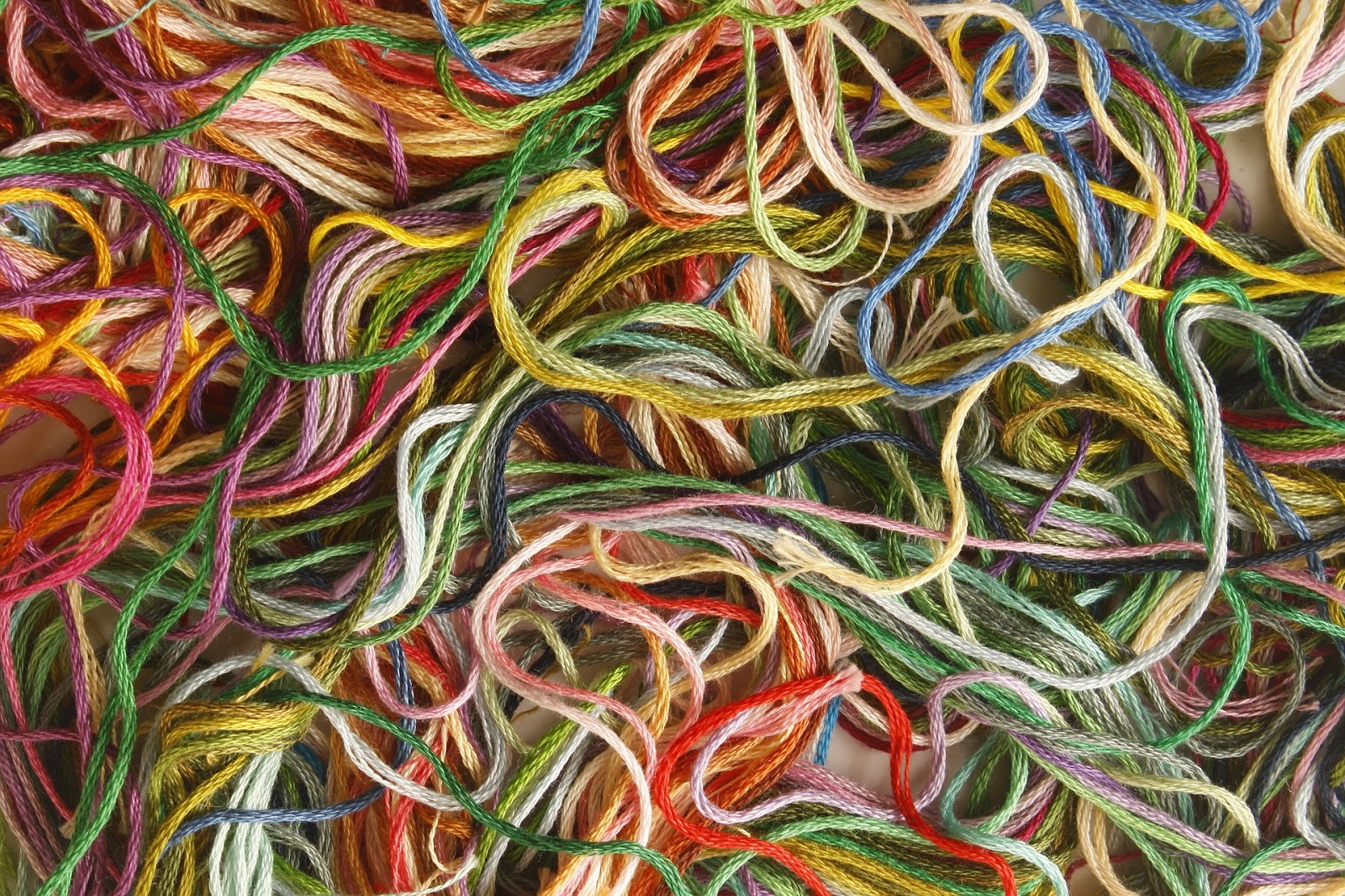 |
| Tangled threads … image via Pixabay |

