
In August I wrote a piece for this blog entitled ‘Growing a Second Skin– dealing with book reviews’. Back then, I was wondering how, as a relatively
newly published author, I was going to cope with the inevitable negative reviews
that would come my way. I sought advice from other authors and was disheartened
to hear that many of them – even bestselling ones – actually don’t cope. It
still hurts them and they simply don’t read them anymore.
newly published author, I was going to cope with the inevitable negative reviews
that would come my way. I sought advice from other authors and was disheartened
to hear that many of them – even bestselling ones – actually don’t cope. It
still hurts them and they simply don’t read them anymore.
That is their coping mechanism. But I don’t know if it would be right
for me. I still hope to be able to engage with critical reviews without it
ruining my day. Perhaps I’m being naïve, but I have taken my own words, which I
wrote at the end of the previous blog, to heart. For those of you who are too
full of mince pies to muster up the energy to click through, I will reprint it
here (you’re welcome, don’t mention it):
“Bad reviews are good for
the soul. They expose your fears, insecurities and pride. So I suppose we
should be grateful for them. They help put you and writing in perspective.
Don’t they …?”
So, my first coping mechanism is to consider my reaction to reviews a
spiritual discipline. Now, whenever I feel really shoddy about a negative
comment or less than glowing review, I try to take it to God sooner rather than
later. I ask myself, and Him, what is it that makes me react this way? Is there
something that God can help me change? Is there a broken part of my heart that
this touches which needs to be offered to the Lord?
This is an ongoing process. With me, at the moment, it’s reviews. But at
different times in my writing life it has been feedback from tutors, rejections
from publishers and agents or simply the lack of progress towards my publishing
dream – which was often interpreted as rejection by God. And of course, there
are areas of my personal life that could do with this kind of treatment too…
Now, before I go any further, I must confess what I’m thinking: “Better
not write that Fiona, you know in the comments you’ll get some people lecturing
you on how well they deal with criticism / reviews etc and that if you want to
be in the business you have to learn to deal with it and grow up.”
not write that Fiona, you know in the comments you’ll get some people lecturing
you on how well they deal with criticism / reviews etc and that if you want to
be in the business you have to learn to deal with it and grow up.”
And I’m already formulating my response: “I know that! [temptation to
add superfluous exclamation marks here]. But I thought by being so open about
my own struggles it might help other writers realise they’re not the only ones
…” Deep breaths. Now, there again, something has come up that I should take to
God. Excuse me while I do it … (……………..Amen!)
add superfluous exclamation marks here]. But I thought by being so open about
my own struggles it might help other writers realise they’re not the only ones
…” Deep breaths. Now, there again, something has come up that I should take to
God. Excuse me while I do it … (……………..Amen!)
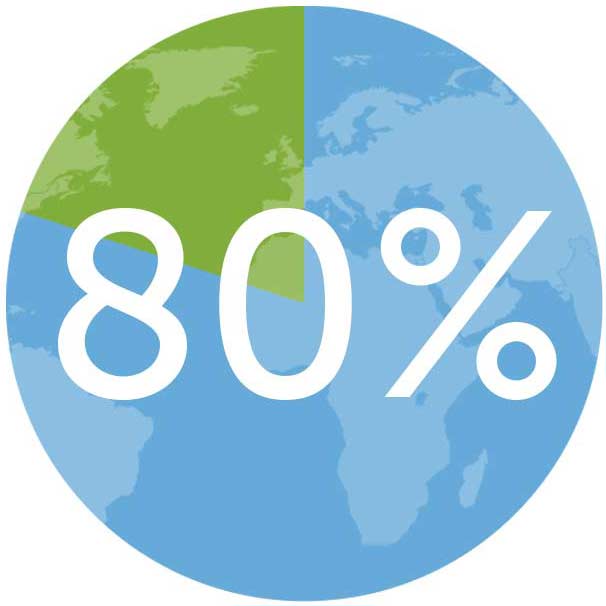
Right, where was I? Oh yes, my coping mechanisms. Well recently, I’ve come up with a new one. I don’t suppose it’s anything new, and in other
areas of life would simply be called ‘looking on the bright side’, but I shall
offer it to you anyway. I have decided that whenever I have a negative review I
remind myself that 80% of people (or at least 80% of those who bother to leave
a review) don’t feel the same. In an election that would be considered a
landslide victory. It’s a silly thing, but I tried it recently, and you know
what? It worked! I felt far less disappointed by the criticism than I had
previously, and more open to considering whether or not there was anything
constructive I could take on board. I’m calling it my 80% Rule. You might want
to try it yourself. But please, finish your mince pies first.
Fiona
Veitch Smith is a writer and writing lecturer, based inNewcastle upon Tyne . She writes across all media, for
children and adults. Her mystery novel The
Jazz Files, the first in the Poppy Denby Investigates Series (Lion Fiction)
was nominated for a CWA Historical Dagger in 2016. The second book, The
Kill Fee is out now, and the third is due out next year. Her children’s
books The
Young David Series and the Young
Joseph Series are published by SPCK.
Her novel ‘Pilate’s Daughter’ a
historical love story set in Roman Palestine, will be published by Endeavour
Press in March.
Veitch Smith is a writer and writing lecturer, based in
children and adults. Her mystery novel The
Jazz Files, the first in the Poppy Denby Investigates Series (Lion Fiction)
was nominated for a CWA Historical Dagger in 2016. The second book, The
Kill Fee is out now, and the third is due out next year. Her children’s
books The
Young David Series and the Young
Joseph Series are published by SPCK.
Her novel ‘Pilate’s Daughter’ a
historical love story set in Roman Palestine, will be published by Endeavour
Press in March.
Originally written by Fiona Veitch Smith

