
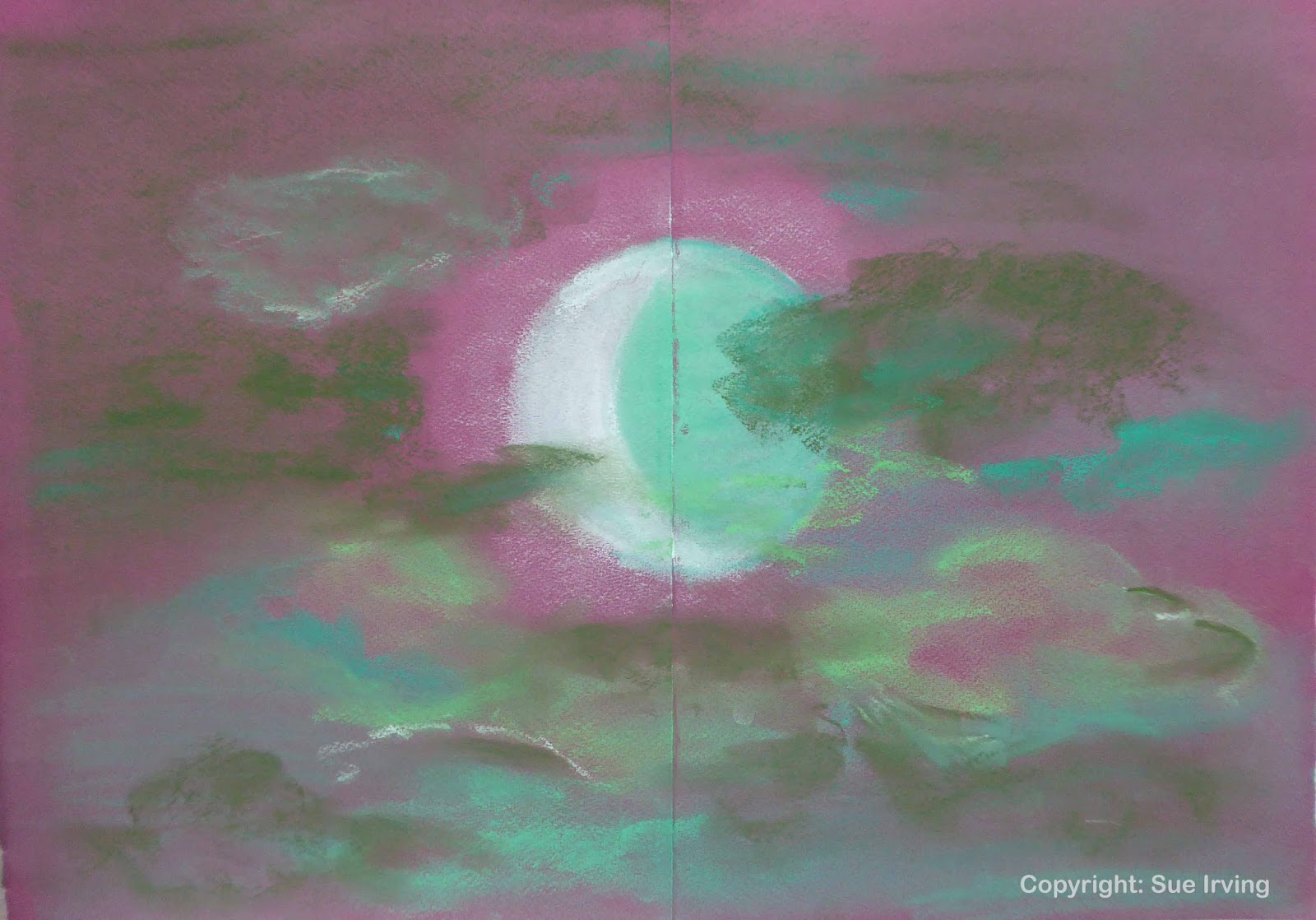
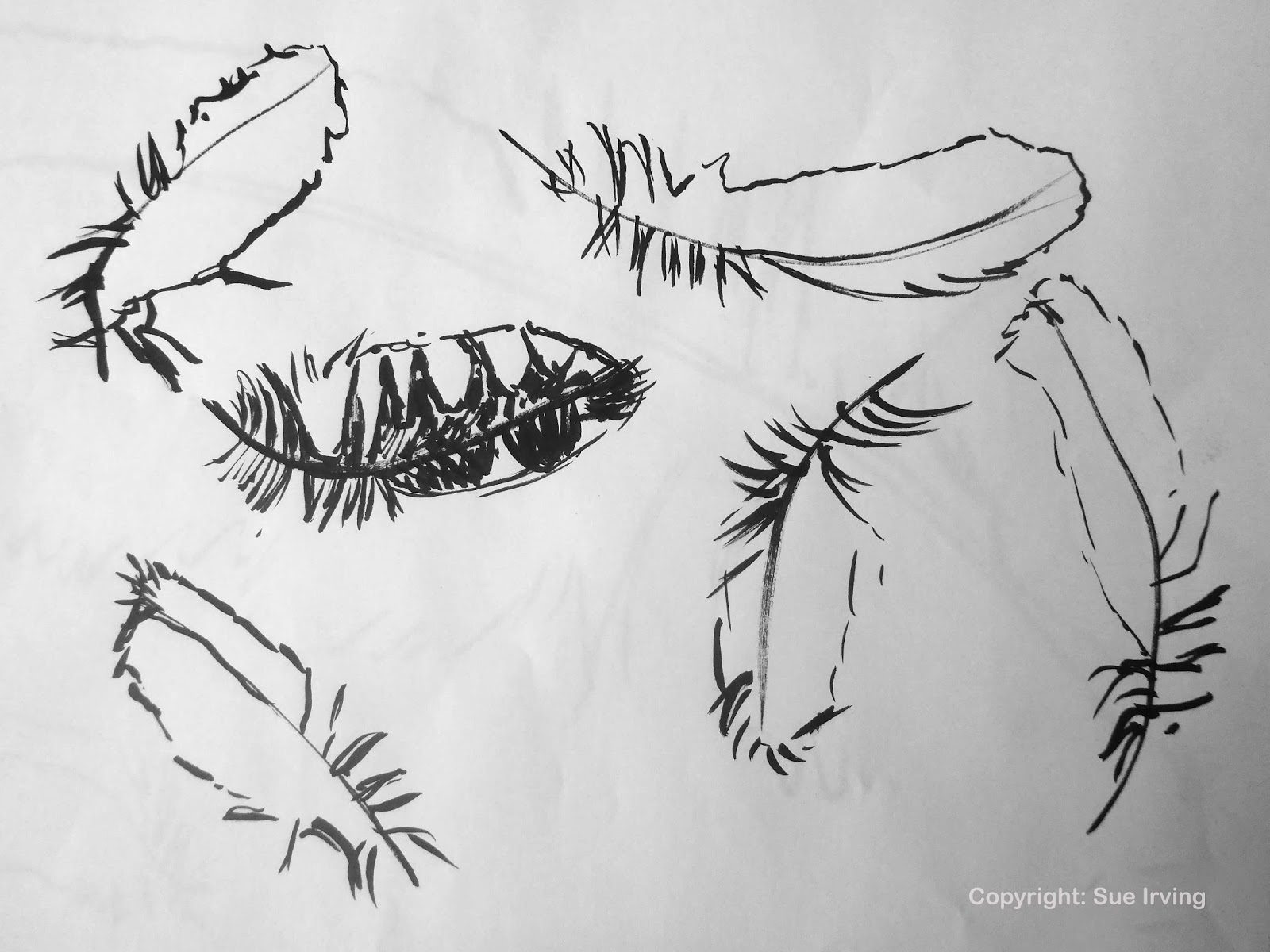
My art courses are teaching me that a playful attitude and the
willingness to experiment are some of the best ways to re-ignite that creative
spark when I am lacking inspiration.
willingness to experiment are some of the best ways to re-ignite that creative
spark when I am lacking inspiration.
Did you
know that there are at least eight different ways to hold a pencil? Neither did
I until I went on a weekend drawing course. Just in case you are wondering: You
can hold a pencil
1)
in the “normal” grip (however you would
automatically hold a pencil, i.e. normal for you)
in the “normal” grip (however you would
automatically hold a pencil, i.e. normal for you)
2)
like a dagger,
like a dagger,
3)
like a Chinese brush artist,
like a Chinese brush artist,
4)
at the very top,
at the very top,
5)
right down at the bottom, so that your
thumb, index and middle finger touch the paper,
right down at the bottom, so that your
thumb, index and middle finger touch the paper,
6)
by sliding the thumb sideways along the
pencil halfway up
by sliding the thumb sideways along the
pencil halfway up
7)
by sliding the thumb sideways along the
pencil, but this time right down at the bottom, so that your thumb is on the
paper
by sliding the thumb sideways along the
pencil, but this time right down at the bottom, so that your thumb is on the
paper
8)
between your index and middle or middle
and ring finger so that it becomes at extension of your arm.
between your index and middle or middle
and ring finger so that it becomes at extension of your arm.
You can
repeat all these grips with your non-dominant hand and also try different
drawing and writing tools. Not only do all the grips feel very different, but
they produce very different results. I have noticed that my attitude and mind-set
changes with each grip, and this in turn affects the energy I put into making
marks on the paper.
These
exercises may also be useful when you are stuck in your writing. How about
trying to consciously hold your pen in a different way or maybe typing straight
into the computer if you usually do your draft by hand (and vice versa)?
exercises may also be useful when you are stuck in your writing. How about
trying to consciously hold your pen in a different way or maybe typing straight
into the computer if you usually do your draft by hand (and vice versa)?
I also
remember being challenged in a creative writing course to explore my points of
view on a subject by alternating between the right and left hand. I was
surprised how my writing voice and my way of thinking changed when I wrote with
my non-dominant hand. This exercise may also be interesting when you are
struggling with writing a dialogue between two characters.
Here
are some other challenges that have been set for me in my art courses that
could be adapted when you feel stuck in your writing:
are some other challenges that have been set for me in my art courses that
could be adapted when you feel stuck in your writing:
1)
Change scale – either drawing much
bigger or much smaller than usual
Change scale – either drawing much
bigger or much smaller than usual
2)
Change paper – both the colour of the
paper and the smoothness of the surface will influence the results
Change paper – both the colour of the
paper and the smoothness of the surface will influence the results
3)
Set yourself limits – for example paint
a picture using only blues or another colour of your choosing and/or only apply
colour with your fingers, a stick, a rock or another implement you would
normally not draw with.
Set yourself limits – for example paint
a picture using only blues or another colour of your choosing and/or only apply
colour with your fingers, a stick, a rock or another implement you would
normally not draw with.
You
could write on an A3 page or then write about the same topic on A6 or smaller. Changing
scale could also mean that you switch from an overview to a small detail.
could write on an A3 page or then write about the same topic on A6 or smaller. Changing
scale could also mean that you switch from an overview to a small detail.
want to experiment what happens to your writing when you write on coloured
paper (red, blue, yellow, green, even black) instead of white paper.
There are numerous ways of setting limits: You could for example
challenge yourself to write a Haiku if you usually write in free verse. You
could write a piece of prose where every word starts with a specific letter.
The possibilities are endless.
challenge yourself to write a Haiku if you usually write in free verse. You
could write a piece of prose where every word starts with a specific letter.
The possibilities are endless.
I am
curious: What helps you to get unstuck? If you are trying out any of my
suggestions, I would also love to know what happens…
curious: What helps you to get unstuck? If you are trying out any of my
suggestions, I would also love to know what happens…
About the author:
Sue Irving is the co-ordinator for the Creative
Communicators in Petersfield. She enjoys helping others develop their
creative potential. She has co-written a book with her husband John about their
experiences when climbing Kilimanjaro. How to conquer a mountain:
Kilimanjaro lessons is available as a paperback and an e-book on Amazon, with
all proceeds going to charity.
Originally written by Sue Irving

