
 |
| Starting out with one Hat |
Some days I feel a lot like Bartholomew Cubbins with his 500
hats: I take one hat off and find another one in its place.
hats: I take one hat off and find another one in its place.
We all have many hats: mother,
father, employee, employer, writer, editor, taxi driver, friend … the list goes
on. Juggling all those hats can feel overwhelming at times.
father, employee, employer, writer, editor, taxi driver, friend … the list goes
on. Juggling all those hats can feel overwhelming at times.
My professional hats include
writer, editor, photographer, student, publisher, proofreader, website designer
and manager, teacher, ACW Events Organiser, and probably others that will come
to me as soon as I hit publish on this blog post. No wonder I feel exhausted so
much of the time! (Well, that and ME/CFS …)
writer, editor, photographer, student, publisher, proofreader, website designer
and manager, teacher, ACW Events Organiser, and probably others that will come
to me as soon as I hit publish on this blog post. No wonder I feel exhausted so
much of the time! (Well, that and ME/CFS …)
So what’s the secret to juggling
so many hats? I wish I knew! But here are some of the things I’ve learned. What
works for me may not work for you, so feel free to offer your own juggling tips
in the comments below.
so many hats? I wish I knew! But here are some of the things I’ve learned. What
works for me may not work for you, so feel free to offer your own juggling tips
in the comments below.
1. Organisation.
I have all of my different projects listed on a To-do List – though I confess I
don’t always look at it! Nevertheless, once something’s on the List, I can
generally keep track of it. Tasks are listed in order of priority, from
‘Urgent’ down to ‘Would like to do … someday.’
I have all of my different projects listed on a To-do List – though I confess I
don’t always look at it! Nevertheless, once something’s on the List, I can
generally keep track of it. Tasks are listed in order of priority, from
‘Urgent’ down to ‘Would like to do … someday.’
There used to be a time when I
didn’t need lists. These days they’re essential – my ME/CFS brain doesn’t
retain things in the way it used to – but I’ve discovered there’s a great
satisfaction in being able to cross something off, which I do even on a Word
file so that I get the buzz of seeing something achieved before deleting it
permanently.
2. Deadlines. I’m
deadline driven. I’ll admit it. Give me a deadline and I rarely miss it.
deadline driven. I’ll admit it. Give me a deadline and I rarely miss it.
3. Scheduling. This
is how I meet those deadlines. On the publishing side, there’s usually an end
date by which a project must be completed. I’ll set mini deadlines for each
stage of the project, and when it’s something that involves other people, mark the dates by which I need to send the project on to the next person/stage. I
usually find these by working backwards from the end date, deciding how long
each stage will take, adding an extra week or two to allow for the possibility
of me having a bad patch and generally trying to reduce the pressure on myself as
much as possible. By having all the projects on the same page, I can see what
needs to be done first and whether I need to do some juggling with the
deadlines and mini-deadlines of different projects to keep them all on target. The writing side, however, is
more problematic.
4. Self-imposed
deadlines. Anyone else find these don’t have quite the same authority as
those set by external sources? Especially if the project isn’t going to
contribute to paying the bills? For me, writing falls into this category,
unless it’s a piece that has been commissioned (which usually means it’s contributing to the bills). This is where a writing buddy – or a writing group
– can play an important role. Being accountable to someone else, even if it’s
just because they’re desperate for the next chapter of your book, can really
help in meeting those ‘flexible’ deadlines. When I wrote my children’s novel, I
sent each chapter to my editor as it was written. While she edited that chapter
I wrote the next. That accountability got me through the mid-book slump and on to The End.
5. Flexibility.
Some days my brain stalls on the next task on my To-Do List. Sometimes I skip
that one and move on to one that feels more manageable. Often doing something
gentler is enough for my brain to recover and I can come back to the task at
the top of the list.
Some days my brain stalls on the next task on my To-Do List. Sometimes I skip
that one and move on to one that feels more manageable. Often doing something
gentler is enough for my brain to recover and I can come back to the task at
the top of the list.
6. Trust. When
I’m feeling overwhelmed by all the hats demanding their place on my head at the
same time, I take a step back and remember that I’m not alone in this journey.
When I don’t have the strength to get everything done, I know God is in the
midst of it all with me. He has called me along this path and he won’t abandon
me now. He knows my limitations and knows how far to stretch me. He doesn’t ask
me to do more than I can – unlike myself!
7. Rest and recharge.
Some days even an ‘easy’ task from my To-Do List isn’t possible. Then I have no
choice but to refill the well. That might mean reading, watching a DVD, doing a
jigsaw puzzle, knitting or stitching, going for a walk, meeting with a friend.
Or it might mean sleeping. Pushing myself through the barrier works sometimes,
at least in the short term, but more often than not, because of the ME, the
cost is too great in the longer term. I’m not very good at balance or at
accepting limitations, so I do push through more often than I should; but I’m
learning not to feel guilty about taking time to take care of myself.
And you? However you manage your commitments, I take my hats
off to you!
off to you!
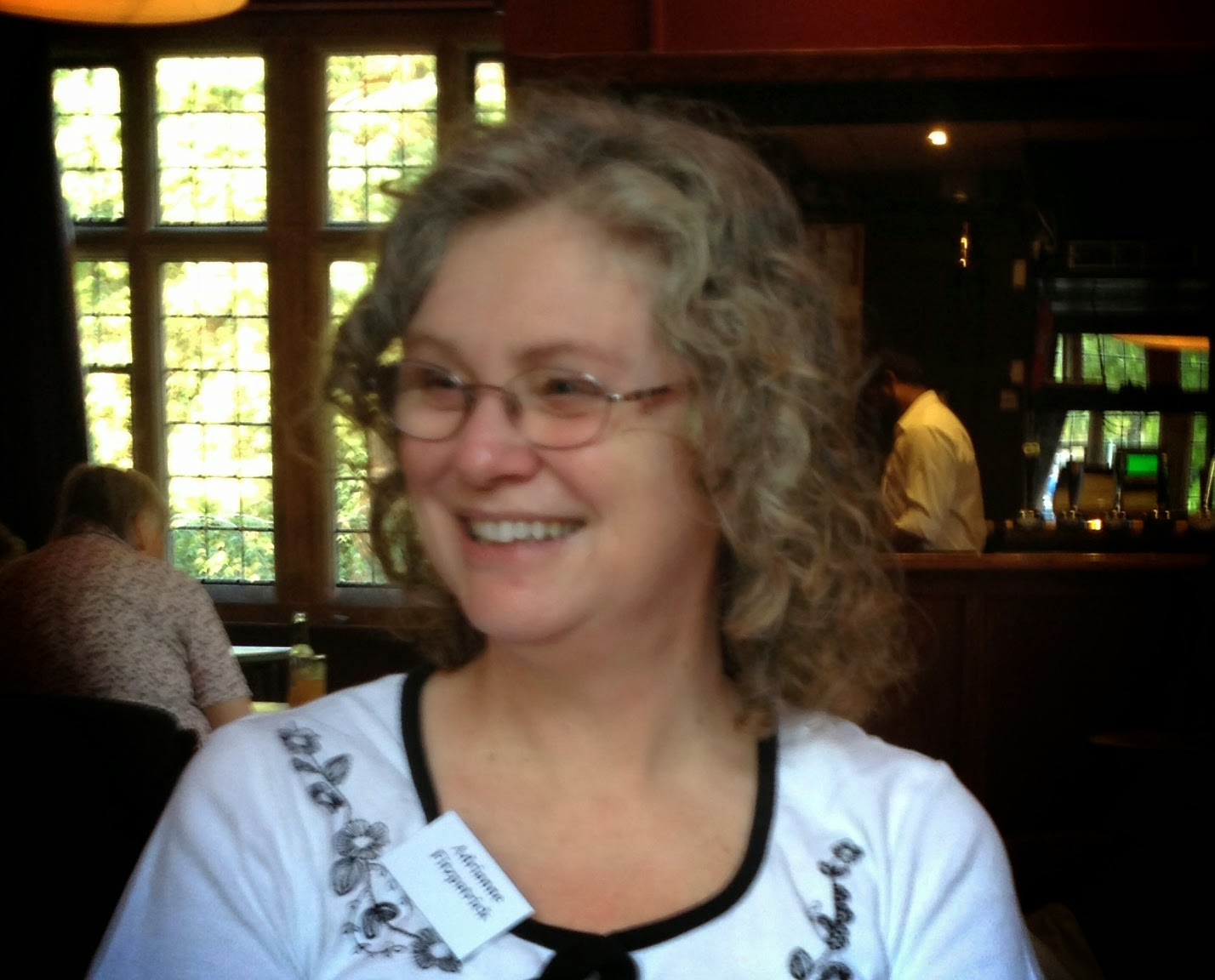 Adrianne Fitzpatrick has around 25 years’ experience in the
publishing industry as a writer (for adults and children), editor, teacher (of
writing and editing), photographer, book designer and bookseller (both new and
secondhand books). She has had numerous short stories and articles published; and her
first novel, Champion of the Chalet School, was published by Girls Gone By Publishers in 2014. Adrianne has
worked with many authors to see their dreams of publication come true, so it’s
not surprising that she has started her own publishing house, Books to Treasure, specialising in books for children.
Originally written by Adrianne

